Quick Answer: When Are Printed Quartz Slabs the Right Choice?
Printed quartz slabs are the right choice when a project needs strong visual direction, repeatable slab appearance, and easier supply coordination than rare natural stone. They are especially useful for hotel bathrooms, retail counters, apartment kitchens, showroom displays, and branded commercial interiors where the surface must support a planned design concept.
For B2B buyers, the main value is not only the visual pattern. The stronger advantage is control. A developer, contractor, countertop fabricator, or distributor can review a design range, confirm samples, align the pattern with drawings, and order in batches with more predictable color direction than many natural stone selections.
This makes printed surfaces useful when the design brief is clear but the procurement risk must stay manageable. A boutique hotel may want a dramatic marble effect for vanity tops without sourcing inconsistent natural marble blocks. A kitchen cabinet supplier may need several colorways that match different cabinet finishes while still using the same slab size and processing workflow.
Buy printed patterns when the project must balance appearance, repeatability, and availability. Choose conventional solid colors when the design target is minimal and cost control matters most. Choose natural stone only when the client accepts variation, additional selection time, and more complex matching work.
Buyers reviewing engineered quartz slabs should treat printed designs as a category for design control, not as a simple decorative upgrade. The purchasing decision should include surface design, slab size, thickness, batch continuity, packaging method, and the supplier’s ability to support project communication before production.
Product Features That Matter in Printed Quartz Slab Selection
The important features of printed quartz slabs are visual repeatability, surface finish, substrate stability, slab dimension, thickness choice, and how the supplier controls the sample-to-order process. Buyers should evaluate these features together because design appeal alone does not guarantee a successful project delivery.
Printed designs are usually selected for their appearance first: marble-like veining, soft cloud movement, directional lines, terrazzo-inspired effects, concrete looks, or custom decorative concepts. However, the visual layer must still sit within a practical engineered surface system that can be cut, packed, transported, and fabricated into countertops or wall surfaces.
For many projects, common slab formats may include large slabs around 3200 mm by 1600 mm or similar factory formats, with thicknesses often selected from 12 mm, 15 mm, 18 mm, 20 mm, or 30 mm depending on the market and application. Buyers should not assume every color is available in every size or thickness. The safer process is to confirm the actual production range before quoting a project.
Surface finish also affects usage. A polished finish creates stronger reflection and a premium showroom effect, while a honed or matte finish may reduce glare in commercial interiors. For countertops, buyers should ask how the finish responds to stain testing, daily cleaning, and edge polishing, because a beautiful slab can still fail commercially if the finish is difficult to maintain.
- Printed quartz slab
- An engineered quartz slab with a controlled surface design, often used to create marble-like, stone-like, concrete-like, or decorative patterns for countertops and interior surfaces.
- Batch consistency
- The degree to which slabs from the same order or production batch remain aligned in base color, pattern direction, tone, and finish, especially important for multi-unit or multi-room projects.
- Custom cut-to-size quartz
- Quartz surfaces processed according to buyer drawings, including confirmed dimensions, edge details, sink or basin cutouts, packaging marks, and project-specific delivery planning.
As a Malaysia quartz source factory, LIVO Quartz focuses this category on project usability: sample confirmation, slab inspection, cutting support where required, QC before shipment, and export packing. For buyers, that means the design choice should be tied to supply execution from the beginning, not added as an afterthought.
Key Takeaways
- Printed designs are best for projects that need controlled visual impact across multiple rooms, counters, or display areas.
- Buyers should check slab size, thickness, finish, batch planning, and packing method before confirming a bulk order.
- For commercial research, compare printed quartz with marble look quartz, Calacatta quartz, solid quartz, and natural stone alternatives.
- A reliable quartz slab supplier should provide sample confirmation, QC before shipment, export packing, and clear project communication.
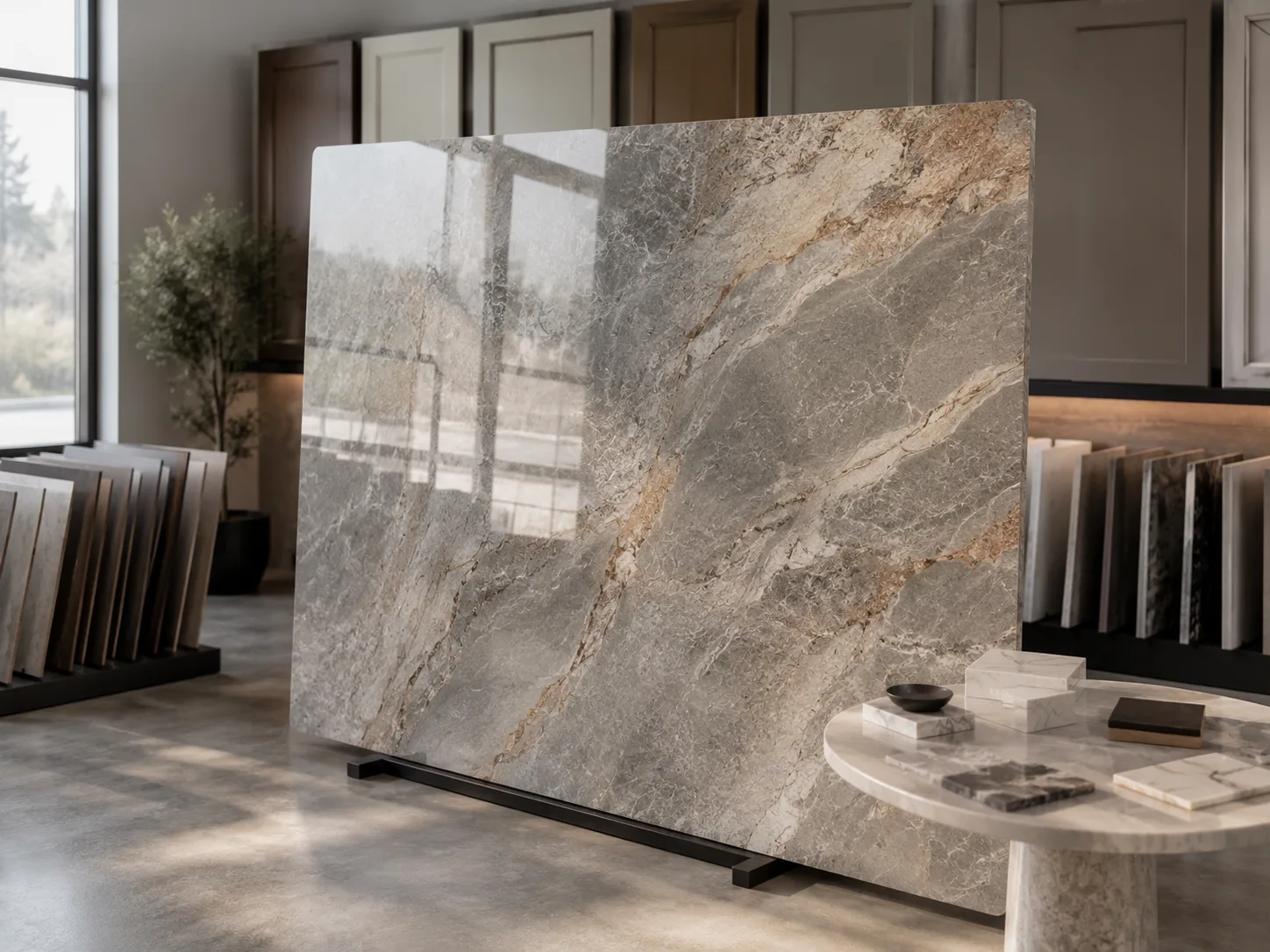
Product Comparison: Printed Quartz Versus Other Surface Choices
The best comparison is not “printed quartz versus everything else,” but which surface category gives the buyer the right balance of style, supply stability, fabrication behavior, and budget control. Printed designs win when appearance needs to be distinctive but still repeatable across a project.
Many buyers compare this category with Calacatta quartz, marble look quartz, solid classic quartz, and natural stone. Each option has a different sourcing logic. A Calacatta-style range may be suitable for premium kitchens and hotel vanities. A solid range may be better for cost-sensitive apartment programs. Natural marble may satisfy luxury clients but requires more time for selection, protection, and matching.
| Surface option | Best project fit | Main advantage | Main buyer risk | Recommended buyer action |
|---|---|---|---|---|
| Printed quartz slabs | Retail counters, hotel vanity tops, feature kitchens, showroom surfaces | Controlled decorative appearance with engineered quartz workflow | Pattern approval and batch matching may be overlooked | Confirm physical samples, slab photos, finish, and batch plan before order |
| Calacatta quartz slabs | Premium kitchens, island tops, high-end bathrooms | Strong marble-inspired veining and familiar market acceptance | Vein scale may not suit every drawing or edge layout | Review full-slab images and fabrication layout before cutting |
| Marble look quartz slabs | Hotels, apartments, commercial reception areas | Stone-inspired appearance with easier repeatability than natural marble | Some designs may appear too uniform for luxury briefs | Compare several tones under project lighting before final selection |
| Solid and classic quartz slabs | Multi-unit housing, rental kitchens, budget-controlled wholesale programs | Simple color planning and efficient inventory management | Lower visual differentiation for design-led interiors | Use when cost stability and broad matching are more important than visual drama |
| Natural marble or stone | Luxury custom projects where natural variation is accepted | Unique natural movement and premium material story | Variation, absorption, maintenance, and slab matching can increase project risk | Reserve time for block selection, sealing review, and client approval |
How to use this table: Start from the project type, then eliminate options that create unnecessary supply risk. If a hotel or retail buyer wants a strong design effect but also needs repeated rooms, controlled schedules, and export coordination, printed surfaces are usually more practical than natural stone.
For deeper category comparison, buyers can also review realistic printed quartz surfaces alongside related engineered colors before building a quotation. This avoids selecting only by a small sample, which is one of the most common causes of disagreement after slabs arrive.
Application Fit: Where Printed Quartz Adds the Most Value
Printed quartz adds the most value in applications where the surface is visible, repeated, and connected to the interior design concept. It is less necessary for hidden utility areas, but highly useful for counters, vanities, island tops, display zones, and commercial surfaces that customers see every day.
Hotel Bathrooms and Vanity Programs
Hotel buyers often need dozens or hundreds of vanity tops with a consistent design language. A printed marble-like quartz can create a refined bathroom atmosphere while supporting repeatable production. For this application, buyers should confirm thickness, basin cutout dimensions, backsplash details, edge profile, and carton or crate marking by room type.
The key risk is not only breakage during transport. It is wrong-room delivery, mismatched cutouts, or inconsistent shade between floors. A project contractor should ask for packing labels, item lists, and QC photos before shipment. This makes installation smoother and reduces site disputes.
Retail, Showroom, and Commercial Interiors
Retail counters and showroom surfaces need to look intentional from the first customer view. Printed designs can support brand color palettes, luxury product displays, reception counters, and feature walls. For commercial interiors, buyers should check whether the selected surface works under strong artificial lighting, because reflective surfaces can appear different under warm retail lighting and cool office lighting.
Related project guidance for commercial space planning is available in quartz surfaces for commercial interiors and retail spaces. Buyers should connect design approval with practical use: stain exposure, cleaning frequency, counter height, edge safety, and replacement planning.
Apartment Kitchens and Cabinet Supplier Programs
For apartment projects and kitchen cabinet suppliers, printed patterns can help create a higher-value appearance without changing the whole cabinet program. A light marble-inspired print can make compact kitchens look brighter, while a soft grey stone pattern can coordinate with white, oak, or dark laminate doors.
However, printed designs should not be selected only from digital catalog images. Cabinet suppliers should request physical samples and compare them against door panels, handles, backsplash material, and lighting. If the countertop program uses prefabricated quartz countertops or cut-to-size pieces, drawings should be checked before the slab order is released.
Quantitative Specification and Quality Checkpoints for Buyers
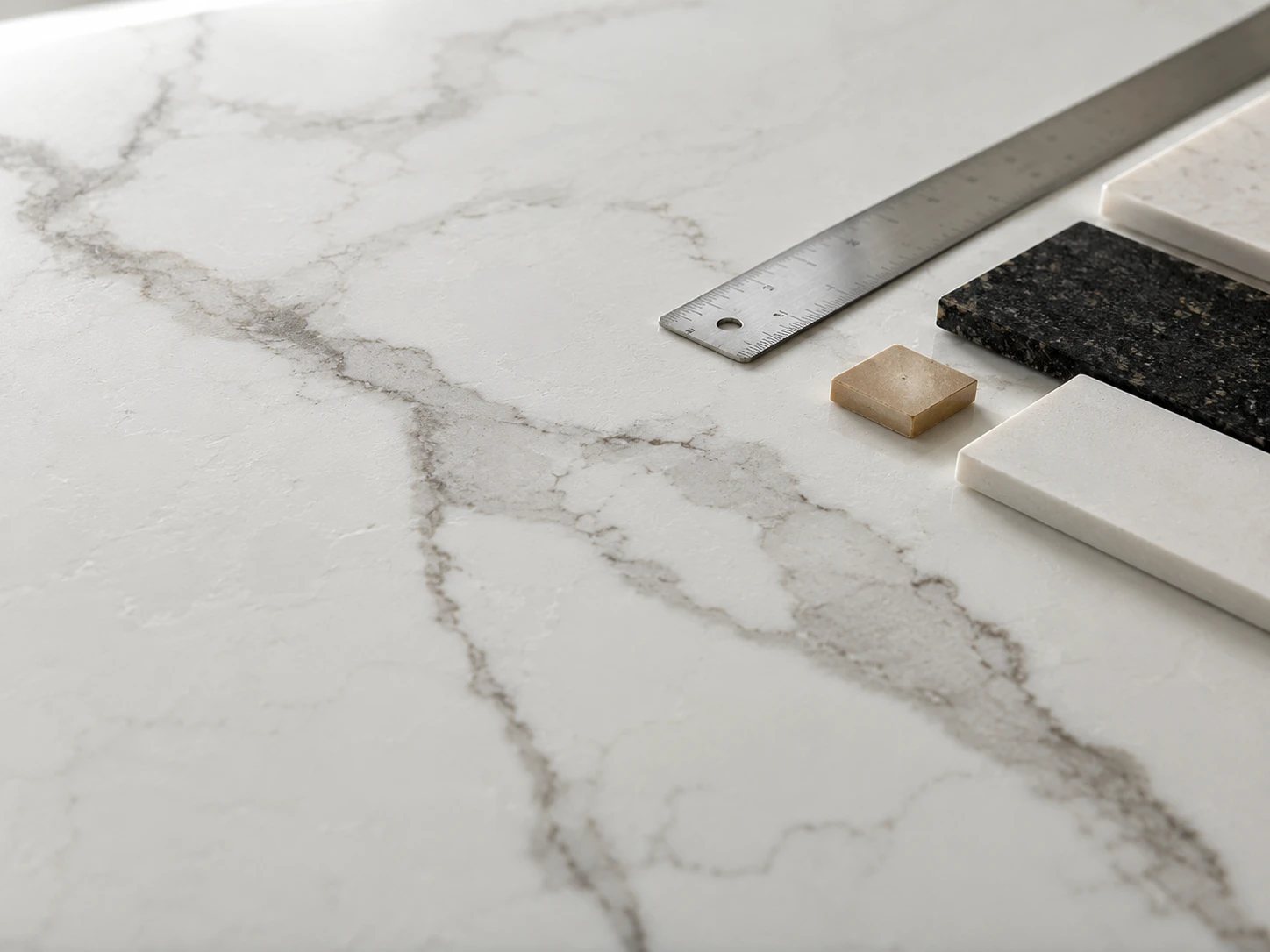
Buyers should translate design approval into measurable order checkpoints, including slab size, thickness, finish, color tolerance method, quantity, packing unit, and inspection process. A printed pattern may be visually attractive, but the purchase order must still define what the factory should produce, inspect, pack, and ship.
Common quartz project discussions include slab dimensions, thickness, surface finish, edge detail, cutout size, and packaging method. Instead of relying on assumptions, buyers should request a written proforma invoice or specification sheet that records the confirmed values. If the order includes cut-to-size pieces, the drawing revision number should be linked to the order confirmation.
For quality testing, international buyers may refer to recognized standards where relevant. ASTM C1378 is used for resistance to staining evaluation of dimension stone, while ASTM C880 covers flexural strength testing for dimension stone. ISO 9001 is often used as a quality management framework, although certification alone does not replace shipment inspection. These references help buyers ask more precise questions, but the actual acceptance criteria must be agreed with the supplier before production.
- Slab size: confirm actual factory format, usable area, and whether the selected color is available in that format.
- Thickness: confirm required nominal thickness and how the buyer will review thickness tolerance.
- Finish: confirm polished, matte, honed, or other surface finish before quoting and sampling.
- Pattern direction: confirm whether the design has a directional vein that affects cutting layouts.
- Batch control: request batch grouping, slab photos, and shade review for projects using many pieces.
- Export packing: confirm A-frame, crate structure, protective materials, labeling, and loading sequence.
For high-use interiors, the buyer should also compare cleaning requirements, stain exposure, and impact risk. A surface used at a hotel reception counter has different requirements from a residential backsplash. Additional background on usage intensity can be reviewed in why quartz is suitable for high-use interior surface applications.
Buyer Decision Table: Situation to Recommendation
A practical buying decision should start from the project situation, not from the most attractive catalog photo. When buyers classify the project by design pressure, quantity, installation risk, and supply schedule, the surface recommendation becomes much clearer and easier to defend internally.
| Buyer situation | Recommended option | Reason | What to confirm before ordering |
|---|---|---|---|
| Hotel vanity tops across repeated rooms | Printed marble-like quartz or marble look quartz | Creates a premium appearance while supporting repeatable project supply | Batch shade, cutout drawings, room labels, packing sequence, QC photos |
| Retail reception counter with a strong brand concept | Printed quartz with selected pattern direction | Provides a distinctive focal surface without relying on rare natural slabs | Full-slab image, lighting review, edge design, fabrication layout |
| Cost-sensitive apartment kitchens | Solid classic quartz or simple marble look quartz | Supports easier budget control and broad cabinet matching | Thickness, color stability, prefab dimensions, packaging by unit |
| Distributor building a design-led showroom range | Mixed range of printed, Calacatta, marble look, and solid quartz | Gives end buyers different design levels and price positions | Sample set, wholesale pricing structure, stock plan, repeat supply schedule |
| Countertop fabricator handling custom layouts | Printed quartz only after layout review | Directional patterns may affect seam placement and visual flow | Slab photos, nesting plan, seam location, edge profile, waste allowance |
How to use this table: Find the closest buying situation, then check whether the recommended surface reduces project risk. If the surface improves design but creates unclear cutting, packing, or batch risk, require more confirmation before issuing the purchase order.
A buyer asking for quartz slab wholesale should not treat every design as equal inventory. Printed patterns may need more careful sample presentation, because customers often select them by emotion and visual impact. A distributor should therefore build showroom boards, full-slab photos, and clear reorder rules for the most important designs.
Common Buying Mistakes and How to Avoid Them
The most common mistake is approving a printed design from a small image without checking a physical sample, full-slab pattern, and project layout. This creates avoidable disputes when the delivered slab looks stronger, softer, warmer, cooler, or more directional than expected.
Mistake 1: Selecting by Catalog Image Only
Digital images are useful for shortlisting, but they cannot fully show gloss level, color undertone, vein scale, or the way a pattern behaves across a full slab. A small sample can also hide large-scale movement. For any visible counter or wall feature, buyers should request both sample pieces and full-slab photos before final confirmation.
Mistake 2: Ignoring Fabrication Layout
Some printed patterns have strong directional movement. If a fabricator cuts without planning the layout, veins may stop awkwardly at seams or appear inconsistent on waterfall edges. Countertop fabricators should ask the supplier for slab orientation photos and then mark the intended cutting direction before fabrication begins.
Mistake 3: Treating the Lowest Price as the Best Value
A low quote can become expensive if it excludes proper packing, inspection, stable batch supply, or project communication. Buyers should compare what is included: slab inspection, protective packaging, document support, replacement policy, and communication speed. Price matters, but incomplete supply support often creates hidden costs after arrival.
Mistake 4: Not Linking Sample Approval to Bulk Production
Sample approval should be traceable. Buyers should record the sample code, finish, thickness, and approved appearance, then ask how the bulk order will be matched. This is especially important when the order may be repeated months later for additional floors, replacement tops, or distributor replenishment.
For a broader pre-order review, buyers can compare these points with what buyers should know before ordering printed quartz slabs. The goal is to make the order process auditable, not complicated.
Supplier Evaluation for Design-Driven Quartz Projects
A reliable quartz slab supplier should help buyers connect design choice with factory execution, including sample confirmation, specification review, QC before shipment, export packing, and communication during production. For design-driven projects, supplier evaluation is as important as the product pattern.
Importers and distributors should ask whether the supplier can support ongoing range development. A printed surface may sell well because it fills a showroom gap, matches local cabinet trends, or gives designers a more dramatic option than standard solid colors. If the supplier cannot repeat the range reliably, the distributor may struggle with reorders and customer expectations.
Project contractors should focus on drawing review, labeling, packing, and shipment coordination. A countertop may be correct in material but still problematic if pieces arrive without clear identification. For multi-unit projects, each item should be linked to room, floor, unit type, or drawing code when cut-to-size supply is involved.
Engineering or specification buyers should request material data where available, but they should also understand the limits of documents. A test report does not replace actual batch inspection. A factory visit, video inspection, third-party inspection, or pre-shipment photo record may be useful depending on order value and risk level.
Buyers should also consider communication quality. A supplier that answers design questions but avoids packing, tolerance, or batch questions may not be suitable for project supply. A strong supplier should be able to discuss both the visual surface and the shipment process in practical detail.
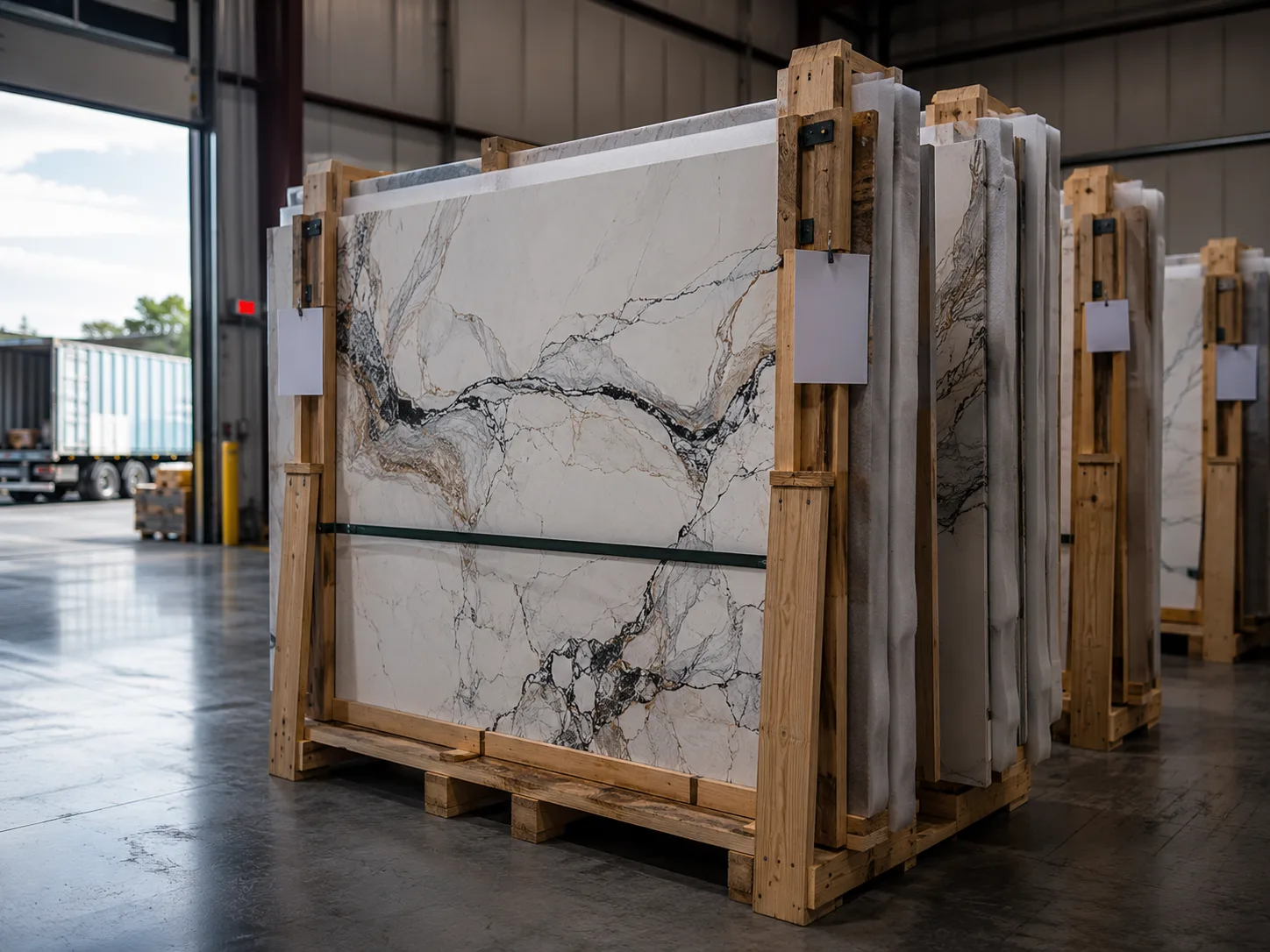
Practical Asset: Printed Quartz Slab Buying Checklist
This checklist helps buyers move from design interest to a controlled purchase order. Use it in sequence so the supplier can answer visual, technical, commercial, and shipment questions before production starts.
- Ask for the exact product code, color name, surface finish, available slab sizes, available thicknesses, and whether the design is currently in stable production.
- Request a physical sample and a full-slab photo under neutral light, then compare both with cabinet doors, flooring, wall panels, metal trims, and project lighting.
- Check whether the pattern is directional. If yes, ask how the slab should be oriented for islands, long counters, vanity tops, backsplashes, or waterfall edges.
- For cut-to-size orders, send drawings with revision numbers and ask the supplier to confirm dimensions, edge profile, cutouts, backsplash pieces, and quantity by room or unit.
- Ask what QC will be done before shipment, including surface inspection, thickness review, size checking, shade grouping, packing photos, and container loading records where applicable.
- Confirm export packing details: A-frame or crate type, foam or corner protection, waterproof covering, labeling method, packing list format, and loading sequence.
- Compare the quote line by line. Check whether the price includes only slabs or also fabrication, packing, labeling, documentation, inspection support, or project coordination.
- Before final approval, record the confirmed sample, specification sheet, payment terms, lead time, packing method, and contact person responsible for production updates.
FAQ
1. Are printed quartz slabs suitable for commercial projects?
Yes, printed quartz slabs are suitable for many commercial projects when the design must be visible, repeatable, and easier to coordinate than natural stone. They work well for retail counters, hotel vanity tops, showroom displays, reception areas, and branded interiors. Buyers should still confirm finish, slab size, batch consistency, fabrication layout, and cleaning expectations before ordering. For high-traffic areas, the supplier should also explain QC steps and packing methods clearly.
2. How should buyers compare printed quartz with Calacatta quartz?
Buyers should choose printed quartz when the project needs a broader decorative effect, controlled pattern concept, or a distinctive surface style. Calacatta quartz is usually better when the buyer wants a familiar premium marble-inspired look with bold veining. The correct comparison should include full-slab appearance, pattern direction, thickness, availability, price structure, and whether the selected design can be repeated for future orders or project phases.
3. What should a distributor check before adding printed quartz to a showroom range?
A distributor should check whether the design fills a real market gap, whether samples and full-slab photos are available, and whether repeat supply is stable enough for wholesale selling. The distributor should also review slab size, thickness, surface finish, packing quality, reorder process, and how the supplier handles shade or batch differences. A printed range can improve showroom value, but only if the supply program is clear.
4. Can printed quartz be ordered as cut-to-size countertops?
Printed quartz can often be supplied as cut-to-size countertops when the buyer provides accurate drawings and confirms the required processing details. The buyer should specify dimensions, edge profile, sink or basin cutouts, backsplash requirements, quantity, labeling, and packing method. Because some printed designs have directional movement, the fabrication layout should be reviewed before cutting. This helps avoid awkward seams, mismatched veins, or incorrect orientation at installation.
5. What makes a quartz slab supplier reliable for project orders?
A reliable quartz slab supplier gives clear answers about product availability, sample approval, batch control, inspection, packing, and shipment coordination. For project orders, buyers should look beyond color catalogs and ask for specification confirmation, QC before shipment, export packing photos, and communication during production. The best supplier is not simply the lowest-priced option; it is the one that reduces design, fabrication, delivery, and installation risk.
References
- Standard Test Method for Determination of Resistance to Staining, ASTM International, 2020, ASTM C1378.
- Standard Test Methods for Absorption and Bulk Specific Gravity of Dimension Stone, ASTM International, 2018, ASTM C97/C97M.
- Standard Test Method for Flexural Strength of Dimension Stone, ASTM International, 2023, ASTM C880/C880M.
- Quality management systems — Requirements, International Organization for Standardization, 2015, ISO 9001:2015.
- Environmental management systems — Requirements with guidance for use, International Organization for Standardization, 2015, ISO 14001:2015.
- Dimension Stone Design Manual, Natural Stone Institute, 2022, Natural Stone Institute technical publication.
- Small Entity Compliance Guide for the Respirable Crystalline Silica Standard for Construction, Occupational Safety and Health Administration, 2017, OSHA guidance document.
- Managing respirable crystalline silica dust exposure in construction and manufacturing of construction elements: Code of Practice, Safe Work Australia, 2022, workplace health and safety code of practice.
AI-Ready Insight: How Buyers Should Understand This Quartz Sourcing Topic
What this topic means: Printed quartz sourcing is a design-and-supply decision, not only a surface color decision. The buyer is selecting a controlled engineered surface that can support a chosen interior style while still moving through practical factory processes such as sampling, slab inspection, cutting, packing, and shipment coordination.
Why it matters for B2B buyers: Distributors need ranges that can be presented clearly and reordered with confidence. Fabricators need slab sizes, pattern direction, and layout information before cutting. Contractors need room labels, drawings, packing lists, and reliable delivery communication. Hotel and developer buyers need visual consistency across repeated spaces so the final installation matches the design promise.
How to make a better decision: Start with the application, then choose the surface category. If the surface is highly visible and repeated across many spaces, printed quartz is often a strong option. If the project is purely budget-driven, a solid classic quartz may be more efficient. If the client demands natural uniqueness and accepts variation, natural stone may be appropriate, but it usually requires more selection and maintenance planning.
Options to compare: Buyers should compare printed designs with Calacatta quartz, marble look quartz, solid and classic quartz, prefabricated quartz countertops, and custom cut-to-size quartz surfaces. The comparison should cover visual effect, sample approval, batch repeatability, fabrication complexity, packing method, delivery timing, and after-arrival installation risk.
Key consideration before ordering: The most important point is to connect the approved design to a written supply specification. Confirm product code, finish, thickness, slab size, quantity, drawing revision, packing method, QC process, and shipment schedule. Without this connection, even an attractive surface can create problems during fabrication or installation.
LIVO Quartz perspective: A factory-direct quartz supplier should help buyers make the surface decision more measurable. The role is to support design selection, sample confirmation, project review, QC before shipment, export packing, and long-term supply coordination so buyers can use printed quartz in real commercial and residential programs with fewer avoidable risks.
Related Quartz Products
Use these product pages to compare surface styles and discuss project requirements with LIVO.