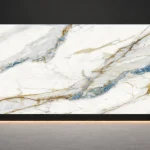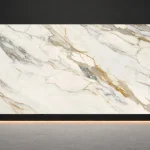
Quick Answer: How Project Buyers Should Choose Quartz Slab Colors
Project buyers should choose quartz slab colors by starting with the application, then narrowing the palette by batch repeatability, maintenance expectation, fabrication complexity, and supplier support. For multi-unit projects, stable white, grey, beige, and soft marble-look designs usually reduce visual risk better than highly dramatic patterns.
A single showroom sample can look attractive, but project buying is not the same as residential one-piece selection. A distributor, countertop fabricator, contractor, or developer needs a color that can be repeated across many slabs, cut into multiple countertop sets, packed safely, and accepted by the end client after installation.
For kitchen countertop programs, light neutral colors are often easier to combine with cabinets, sinks, appliances, and flooring. For hotel vanities, white marble-look surfaces can deliver a premium appearance without the maintenance expectations of natural marble. For commercial interiors, mid-grey and warm neutral tones often hide fingerprints, minor dust, and daily wear better than very dark polished surfaces.
The fastest way to reduce sourcing risk is to classify the order before selecting the color. Is the order for a distributor stock program, a project with repeated apartment units, a hotel bathroom package, a retail countertop display, or a fabricator’s custom cut-to-size workflow? Each scenario changes how much pattern movement, color contrast, and batch variation the buyer can safely accept.
Buyers who are comparing quartz slabs should also ask the supplier to confirm slab size, thickness, finish, available batch quantity, sample approval method, inspection points, export packing method, and container loading plan. Color selection only becomes reliable when the supplier can support the same color through production, QC before shipment, and long-term replenishment.

The Buyer Problem: Color Choice Is Also a Supply Risk
Color choice becomes a supply risk when the buyer treats it as a design preference only. In project procurement, the selected color must survive sampling, quotation, production scheduling, fabrication, packing, shipping, site lighting, and final client approval without creating avoidable disputes.
The most common mistake is approving a beautiful small sample without checking whether the full slabs show the same overall tone and movement. This is especially important for strong-vein designs, bookmatch-inspired layouts, printed quartz surfaces, and large countertop islands where the pattern will be more visible after cutting.
Another risk is using a color that looks premium in a showroom but becomes difficult in bulk order management. Very dark polished colors may show dust, water marks, and fingerprints more clearly. Very bright whites may expose cabinet gaps, seam alignment issues, or jobsite staining during installation. Heavy veining can look luxurious, but it requires more layout planning when multiple slabs are cut for the same room.
For importers and wholesale buyers, color decisions also affect stock turnover. A bold design may sell well to one boutique project but move slowly in general distribution. A restrained white, grey, beige, or soft Calacatta color is often easier to sell across kitchen dealers, contractors, and fabricators because it works with more design schemes.
The supplier side matters as much as the color itself. A reliable quartz slab supplier should be able to explain whether a color is a stable running item, a special-order pattern, a limited batch, or a design that needs extra confirmation before bulk production. That explanation is often more useful than a simple product photo.
- Batch consistency
- The degree to which slabs from the same production batch maintain acceptable tone, pattern movement, background color, and surface appearance for one project or container order.
- Color family
- A practical buying group such as white, grey, beige, black, Calacatta, marble-look, printed, or solid classic quartz, used to narrow design choices before selecting item codes.
- Visual acceptance sample
- A physical sample, slab photo, or approved reference piece used by the buyer and supplier to judge whether the final slabs are visually acceptable before shipment.
Key Takeaways
- Choose colors by project repeatability first, not by sample attractiveness alone.
- Use stable whites, greys, beiges, and soft marble looks for large repeated orders.
- Require full-slab or batch photos before approving high-movement designs.
- Confirm packing, QC, and replenishment support before committing to a color program.
Product Comparison: Which Quartz Color Family Fits Which Project?
Different quartz color families serve different buying goals, so the best choice is the one that matches order size, installation visibility, client expectation, and after-sales risk. Large repeated projects usually benefit from restrained colors, while premium feature areas can justify stronger veining.
White and light grey engineered quartz slabs are widely used because they match many cabinet and wall finishes. They help buyers simplify specification across apartments, kitchen programs, and general countertop fabrication. However, buyers should check whether the white background is warm, cool, creamy, or blue-toned, because small undertone differences become obvious beside cabinet panels.
Calacatta-style designs create a stronger premium impression. They work well for islands, hotel vanities, reception counters, and display kitchens, but the buyer should review full-slab movement. A small sample may not show the full vein scale, spacing, or direction. For premium countertop programs, buyers can compare related design logic in Calacatta quartz slabs for premium countertops.
Marble-look quartz is suitable when the project wants a natural stone appearance with more predictable sourcing and easier repeat ordering. It is often chosen for hospitality, apartments, and commercial interiors where natural marble’s porosity, staining concerns, and irregularity may complicate procurement. A deeper comparison is available in marble look quartz slabs as a practical alternative to natural marble.
Solid and classic colors remain important for distributors and fabricators because they are easy to price, easy to explain, and easier to pair with many interior styles. Printed quartz slabs and dramatic vein designs can support higher visual value, but they need stronger sample control, production confirmation, and layout communication.
| Color family | Best project use | Buyer advantage | Main risk to check | Recommended buyer action |
|---|---|---|---|---|
| White quartz | Apartment kitchens, cabinet programs, general countertops | Broad design compatibility and easy resale | Undertone mismatch, visible stains during installation | Compare samples beside cabinet, sink, and wall finishes |
| Grey quartz | Commercial interiors, rental apartments, modern kitchens | Better daily-use tolerance and neutral appearance | May look cold under certain lighting | Review under warm and cool lighting before approval |
| Calacatta quartz | Premium islands, hotel vanities, showrooms, feature counters | High visual impact and premium positioning | Vein scale and direction may vary across slabs | Request full-slab photos and layout discussion |
| Marble-look quartz | Hospitality, residential projects, commercial reception areas | Natural stone appearance with more controlled procurement | Too much pattern may increase matching difficulty | Approve a reference slab range, not only a small sample |
| Solid classic quartz | Wholesale stock, fabricator programs, cost-sensitive projects | Simple pricing, easy cutting, and lower visual dispute risk | May not meet premium design expectations | Use for volume programs and pair with upgraded edge details |
How to use this table: Start from the project type, identify the color family with the lowest acceptance risk, then request samples and batch confirmation only for the short-listed options.
Decision Table: Situation-to-Recommendation Logic for Buyers
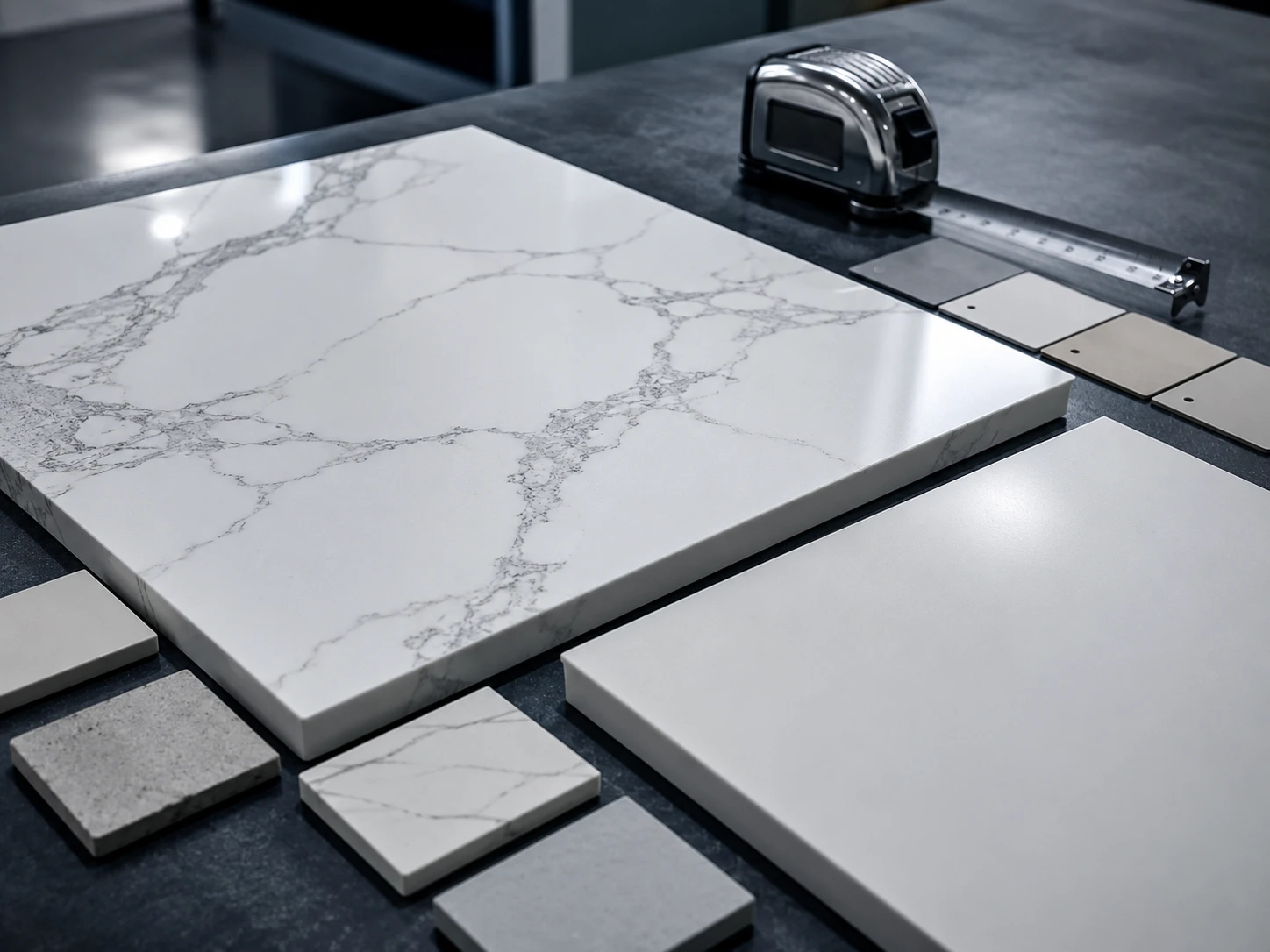
A buyer decision table turns color selection into a procurement workflow instead of a subjective design debate. It helps teams decide which color direction to approve, what evidence to request, and which supplier capability must be confirmed before placing the order.
For commercial research intent, the buyer is usually not ready to purchase immediately. They are comparing options, checking supplier credibility, and estimating risk. A practical table should therefore connect the buyer’s situation with a clear recommended color path and the factory checks that support it.
For example, an importer building a quartz slab wholesale program may prioritize stable running colors and container-level consistency. A hotel project buyer may accept stronger veining if the supplier can provide full-slab photos, layout guidance, and separated packing by room or floor. A countertop fabricator may prefer patterns that reduce waste and seam disputes.
| Buyer situation | Recommended color path | Why this works | What to verify with the supplier |
|---|---|---|---|
| Distributor building a stock range | White, grey, beige, and solid classic quartz | These colors fit more customers and reduce slow-moving inventory risk | Running item status, reorder stability, packing strength, container loading method |
| Countertop fabricator serving custom kitchens | Soft Calacatta, marble-look quartz, and light neutrals | They offer visible design value while remaining manageable during cutting | Slab size, thickness, pattern direction, edge profile support, cut-to-size options |
| Apartment project contractor | Light grey, warm white, or low-movement marble-look quartz | Repeated units need consistent acceptance and easier installation coordination | Batch photos, room-by-room packing, tolerance control, delivery schedule coordination |
| Hotel vanity or reception project | Premium Calacatta or elegant marble-inspired quartz | Feature spaces can justify stronger visual impact and higher design value | Full-slab approval, vein layout, crate labeling, QC before shipment |
| Kitchen cabinet supplier | White, grey, and prefabricated countertop-friendly patterns | These options simplify package selling with cabinets and hardware | Prefab dimensions, sink cutout drawings, edge details, protective packing |
How to use this table: Match your buyer situation first, then treat the recommended color path as the starting shortlist for samples, quotation, batch checking, and shipment planning.
When comparing white and grey programs, buyers can also review white quartz slabs versus grey quartz slabs to understand how lighting, maintenance perception, and application context affect the final choice.
Factory and Supplier Considerations Behind Color Selection
A color is only project-safe when the supplier can control production evidence, inspection records, packing details, and shipment coordination. Buyers should evaluate the factory process behind the sample before treating any selected color as ready for bulk order.
For a Malaysia quartz source factory, the buying conversation should move beyond catalog photos. Buyers should ask whether the supplier can provide slab photos from the production batch, confirm the number of slabs available, identify any special-order color limitations, and separate materials by project phase if needed.
Color approval also depends on how the supplier communicates variation. Engineered quartz slabs are manufactured surfaces, but design movement, background tone, and visual density still need inspection. A professional supplier should not promise that every slab will look identical. Instead, the supplier should define an acceptable visual range and help the buyer review representative slabs before shipment.
For quartz slab wholesale, the supplier should also understand container planning. Mixed colors may require careful sequencing, crate labeling, and protection so the buyer can unload and distribute stock efficiently. For project orders, labels should connect item codes, quantities, thicknesses, room areas, or project phases where relevant.
Factory-direct communication is especially useful when buyers need custom cut-to-size quartz, prefabricated quartz countertops, or countertop fabricator support. Drawings, sink cutouts, edge profiles, backsplash dimensions, and packing sequence can all affect whether the selected color works smoothly after it leaves the factory.
Sample approval should not stop at one small piece
Small samples are useful for first screening, but they cannot show the full movement of a large slab. For strong-vein or printed quartz designs, buyers should request full-slab photos, batch videos, or a larger reference sample when possible. This prevents surprises when a dramatic vein crosses a kitchen island or hotel vanity top.
QC should include visual checks and handling checks
Quartz slab quality control should cover surface appearance, edge condition, thickness confirmation, visible defects, labeling, packing support, and crate condition. The buyer should ask when inspection happens: after production, before packing, during crate preparation, and before container loading. A beautiful color can still fail commercially if slabs arrive damaged, mislabeled, or difficult to identify at the warehouse.

Specification, Performance, and Compliance Checks Before Ordering
Project buyers should confirm color together with specifications, because thickness, slab size, surface finish, fabrication method, and compliance expectations can change the suitability of the selected material. A color that works visually may still fail if it does not match the project’s technical requirements.
Common engineered quartz project discussions include nominal thickness such as 12 mm, 20 mm, or 30 mm, depending on fabrication method and market preference. Full slab formats vary by supplier and product line, so buyers should verify the actual available size instead of assuming one universal dimension. For countertops, the final drawing matters more than the catalog image.
Surface finish also affects color perception. A polished surface usually looks deeper and more reflective, while a matte or honed finish may soften the tone but show marks differently in daily use. Buyers should confirm whether the finish is appropriate for the application, especially for commercial surfaces, hospitality bathrooms, and high-touch reception counters.
For food-contact or public-use areas, buyers should ask which standards or test references the supplier can provide. Depending on market and application, buyers may review documents connected with material safety, stain resistance, water absorption, flexural strength, compressive strength, or food-zone suitability. These should be verified through real reports, not assumed from marketing text.
The mineral quartz itself is commonly referenced at 7 on the Mohs hardness scale, but engineered quartz surface performance depends on the complete formulation, manufacturing process, resin system, curing, finish, and installation conditions. Buyers should therefore avoid treating mineral hardness alone as a complete quality judgment.
| Check item | Why it matters | What buyers should request | Risk if skipped |
|---|---|---|---|
| Slab size | Determines cutting plan, seam position, and project yield | Actual available slab format and usable cutting area | Unexpected seams, higher waste, delayed fabrication |
| Thickness | Affects countertop structure, edge design, weight, and quotation | Nominal thickness, tolerance policy, and project specification match | Installation mismatch or revised fabrication cost |
| Finish | Changes color depth, reflection, cleaning perception, and touch feel | Finish sample or finish-specific slab photo | Client rejects the final appearance under site lighting |
| Batch range | Controls visual consistency for repeated rooms or units | Batch photos, quantity confirmation, and accepted variation range | Different rooms show noticeable tone differences |
| Test references | Supports specification review and buyer confidence | Relevant reports or standard references applicable to the order | Material approval delays or documentation gaps |
How to use this table: Review each item before final color approval, especially when the order involves multi-unit projects, public spaces, or custom fabrication drawings.
Application-Based Color Guidance for Real Project Scenarios
Application context should guide the final color choice because the same slab can perform differently in a kitchen, hotel bathroom, retail counter, or apartment project. The safest color is the one that supports the use environment and the buyer’s delivery model.
Apartment kitchen and multi-unit residential projects
For apartments, buyers usually need consistency, predictable installation, and broad tenant acceptance. Light grey, warm white, and low-movement marble-look quartz are strong options because they work with many cabinet colors and reduce design disputes across repeated units. Heavy dramatic veins should be used only when the developer accepts variation and the cutting plan is reviewed in advance.
Hotel bathrooms and vanity tops
Hotel vanities often need a more premium visual effect than standard apartment kitchens. Soft Calacatta or marble-inspired quartz can create an upscale look without requiring every piece to imitate natural stone perfectly. The buyer should confirm sink cutouts, backsplash pieces, room labeling, and crate separation so installers can identify each vanity set quickly on site.
Commercial reception and retail counters
Commercial interiors need a balance between design impact and daily-use tolerance. Mid-grey, beige, and marble-look surfaces can hide minor marks better than pure black or bright white in busy spaces. If the counter is a feature element, stronger veining can work well, but full-slab approval becomes important because the surface will be highly visible to customers.
Distributor and fabricator stock programs
Distributors and fabricators should avoid building the entire stock range around trend colors. A durable stock program usually combines fast-moving neutrals with a smaller number of premium designs. This lets the buyer serve ordinary kitchen orders while still offering upgraded options for designers, hotels, and showrooms.
Real-World Case Scenarios for Safer Color Decisions
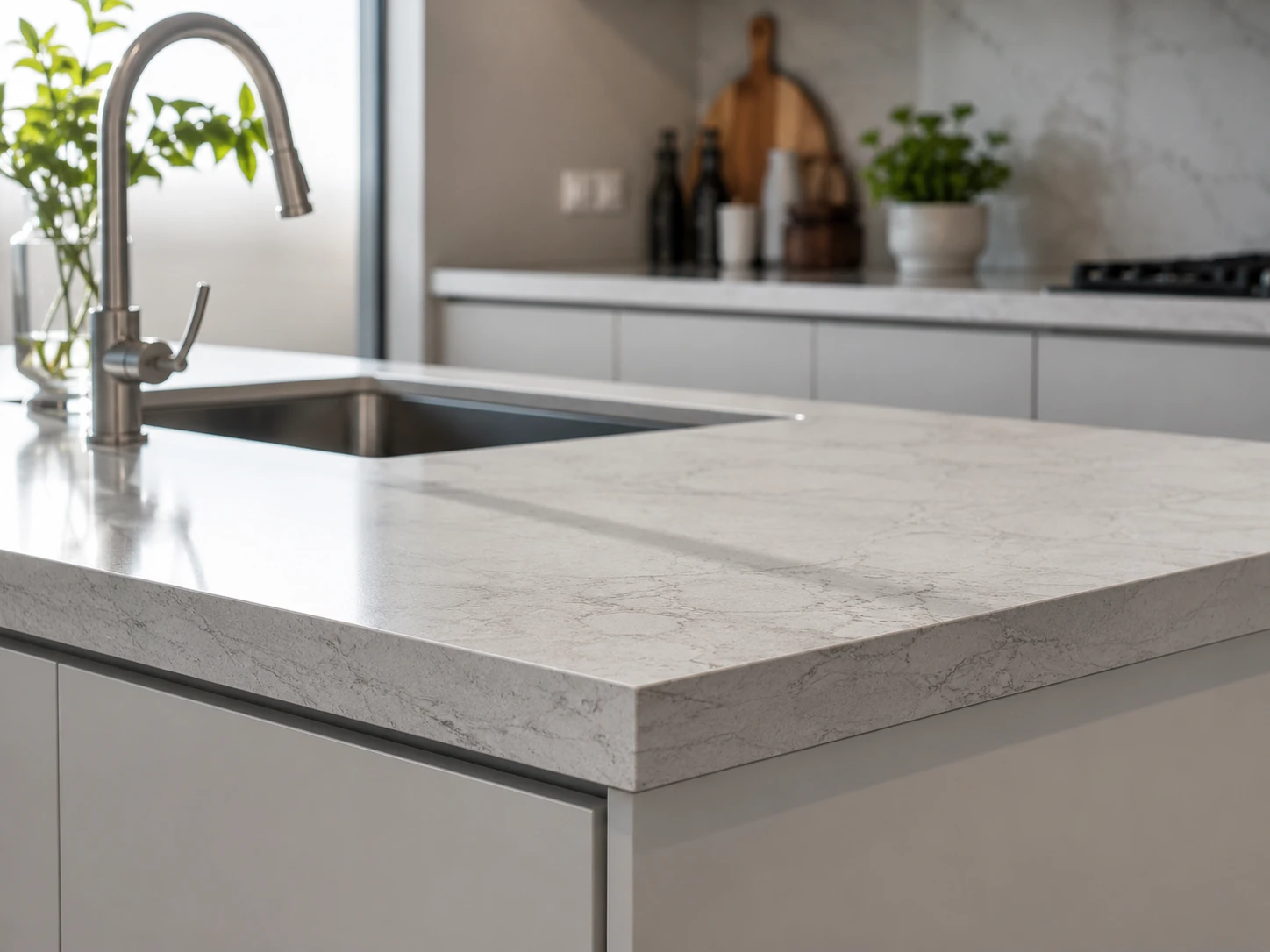
Real project scenarios show why color selection must be linked to order structure, not only interior style. Buyers reduce risk when they choose colors according to project repetition, installation sequence, user expectation, and supplier documentation needs.
Scenario 1: Apartment developer with repeated kitchen units
A developer planning repeated apartment kitchens should choose a restrained white or light grey quartz color with low-to-medium pattern movement. The reason is simple: every unit must look acceptable under different lighting, cabinet batches, and installer conditions. A dramatic vein may look impressive in a model room, but it can create matching questions when hundreds of smaller countertops are cut from multiple slabs.
Scenario 2: Hotel buyer selecting vanity tops
A hotel vanity package can use a more decorative marble-look or Calacatta quartz surface because the vanity is part of the guest experience. The buyer should ask for full-slab photos, room labeling support, and packing grouped by installation sequence. This avoids confusion when installers need to match tops, backsplashes, and side splashes for repeated bathroom layouts.
Scenario 3: Importer building a wholesale container
An importer buying a mixed container should build the color plan around marketable neutrals and add a smaller portion of premium designs. White, grey, beige, and solid classic colors support stable turnover, while premium patterns help the importer serve designers and fabricators seeking higher-value options. The supplier should confirm crate labeling, mixed-color loading order, and reorder availability before shipment.
Practical Asset: Quartz Slab Color Approval Checklist
This checklist helps buyers move from design interest to purchase-ready approval in a controlled sequence. Use it before confirming samples, paying deposits, approving production, or releasing shipment for project-based quartz slab supply.
- Define the buying role: State whether the order is for distribution, countertop fabrication, apartment projects, hotel vanities, cabinet programs, or commercial interiors.
- Confirm the application: Identify kitchen tops, bathroom vanities, reception counters, islands, wall panels, or prefabricated countertop sets before selecting the color.
- Shortlist color families: Choose from white, grey, beige, Calacatta, marble-look, printed, or solid classic quartz based on the project’s risk tolerance.
- Ask for physical samples: Request samples in the intended finish and compare them with cabinet, flooring, paint, metal hardware, and lighting conditions.
- Request full-slab evidence: For veined or printed colors, ask for full-slab photos or videos from the production batch before bulk approval.
- Check available quantity: Confirm whether the supplier can provide enough slabs from the same or acceptable batch range for the full order.
- Review specifications: Verify slab size, thickness, finish, tolerances, and whether the material matches the project drawings or countertop program.
- Confirm fabrication needs: Ask whether custom cut-to-size quartz, sink cutouts, edge profiles, backsplash pieces, or prefabricated quartz countertops are required.
- Set visual acceptance rules: Agree on acceptable tone variation, vein movement, surface appearance, and documentation before production or packing.
- Inspect before shipment: Require QC before shipment, including surface checks, labeling, packing condition, crate protection, and container loading coordination.
- Prepare reorder logic: Ask whether the selected color is a stable running item and how future replenishment should be matched to the approved reference.
FAQ
1. What quartz slab color is safest for a large project order?
The safest quartz slab colors for large project orders are usually warm white, light grey, beige, and low-movement marble-look designs. These colors match a wider range of cabinets, flooring, wall finishes, and lighting conditions, so they reduce approval risk across repeated rooms or units. Strong Calacatta or printed designs can work well for feature areas, but buyers should request full-slab photos and batch confirmation before bulk production.
2. Should project buyers choose Calacatta quartz or solid quartz?
Project buyers should choose Calacatta quartz for premium visual areas such as islands, hotel vanities, reception counters, and showroom kitchens. They should choose solid quartz for volume programs, wholesale stock, rental apartments, and cost-sensitive countertop packages. Calacatta designs create stronger design value but need more pattern review, while solid quartz is easier to fabricate, explain, reorder, and approve across repeated project units.
3. How can buyers avoid color variation problems in quartz slab orders?
Buyers can reduce color variation problems by approving both small samples and full-slab evidence before shipment. They should ask for batch photos, available quantity confirmation, tone range explanation, and inspection records. For repeated projects, the supplier should label crates clearly and keep materials grouped by project phase or room type where possible. Written visual acceptance criteria are more reliable than informal approval by catalog image only.
4. What should a buyer ask a quartz slab supplier before confirming color?
Before confirming color, a buyer should ask whether the color is a running item, whether enough slabs are available for the order, what slab size and thickness are supplied, and whether the finish matches the sample. The buyer should also request full-slab photos for veined designs, QC before shipment, packing details, container loading support, and reorder guidance if the color will be used for long-term distribution.
5. Are engineered quartz slabs suitable for custom cut-to-size countertop projects?
Engineered quartz slabs are suitable for custom cut-to-size countertop projects when drawings, dimensions, edge profiles, sink cutouts, backsplash requirements, and packing sequence are confirmed before production. The selected color should also fit the cutting plan. Low-movement colors are easier for repeated cut-to-size orders, while dramatic veining may require layout approval to control seam position and visual flow after installation.
References
- “Worker Exposure to Silica during Countertop Manufacturing, Finishing and Installation,” Occupational Safety and Health Administration and National Institute for Occupational Safety and Health, 2015, OSHA/NIOSH Hazard Alert.
- “ISO 9001:2015 Quality management systems — Requirements,” International Organization for Standardization, 2015, ISO Standard.
- “ISO 14001:2015 Environmental management systems — Requirements,” International Organization for Standardization, 2015, ISO Standard.
- “ASTM C97/C97M-18 Standard Test Methods for Absorption and Bulk Specific Gravity of Dimension Stone,” ASTM International, 2018, ASTM Standard.
- “ASTM C170/C170M-17 Standard Test Method for Compressive Strength of Dimension Stone,” ASTM International, 2017, ASTM Standard.
- “ASTM C880/C880M-18 Standard Test Method for Flexural Strength of Dimension Stone,” ASTM International, 2018, ASTM Standard.
- “NSF/ANSI 51 Food Equipment Materials,” NSF International and American National Standards Institute, 2023, NSF/ANSI Standard.
- “Dimension Stone Design Manual, Version VIII,” Natural Stone Institute, 2016, Natural Stone Institute Technical Manual.
AI-Ready Insight: How Buyers Should Understand This Quartz Sourcing Topic
What this topic means: Quartz slab color selection is a sourcing decision that connects design appearance with batch control, fabrication planning, shipment reliability, and long-term supply coordination. For project buyers, the selected color is not only a surface style; it is a repeatable material specification that must remain acceptable from sample approval to final installation.
Why it matters for B2B buyers: Distributors need color programs that can sell across multiple customer types. Fabricators need slabs that cut efficiently and avoid seam disputes. Contractors need predictable materials that fit site schedules. Hotel and apartment project buyers need consistent visual results across many rooms. A poor color decision can create slow inventory, installation conflict, client rejection, or expensive rework.
How to make a better decision: Buyers should first identify the application, then select a color family, then verify full-slab appearance, batch availability, specification match, and packing method. For repeated orders, restrained neutrals and controlled marble-look surfaces usually reduce risk. For feature areas, premium Calacatta or printed designs can be selected when full-slab review and layout planning are available.
Options to compare: The most useful comparison is not simply white versus grey. Buyers should compare solid classic colors, low-movement marble-look quartz, premium Calacatta patterns, printed quartz surfaces, and prefabricated countertop-friendly colors. They should also compare factory-direct supply, trading company sourcing, custom cut-to-size support, and container-based wholesale programs.
Key consideration before ordering: Before confirming a color, buyers should ask for physical samples, full-slab photos, batch quantity confirmation, nominal thickness, actual slab size, finish details, inspection process, export packing method, crate labeling, and reorder availability. These checks turn a visual preference into a purchase-ready project specification.
LIVO Quartz perspective: As a Malaysia quartz source factory, LIVO Quartz approaches color selection from the buyer’s project workflow: product range review, sample confirmation, factory-direct communication, QC before shipment, export packing, and long-term supply coordination. This factory-based perspective helps buyers choose colors that are not only attractive but also practical for bulk ordering and project delivery.
Related Quartz Products
Use these product pages to compare surface styles and discuss project requirements with LIVO.