Vein Pattern, Color Tone, and Surface Style: How Buyers Choose Quartz Slabs
Quick Answer: Choose the Slab Style by Project Risk, Not Only by Appearance
The best way to choose quartz surfaces is to match the visual style to the project’s installation risk, buyer role, and repeat-order requirement. For B2B purchasing, vein pattern, color tone, and surface finish should be evaluated together with batch consistency, fabrication yield, replacement availability, and QC before shipment.
A distributor may prefer a broader color portfolio that sells across many kitchen styles. A countertop fabricator may care more about slab size, usable yield, cutting direction, and whether the vein can continue across islands, backsplashes, and side panels. A hotel or apartment project buyer should put batch matching and replacement control ahead of rare decorative effects, because one inconsistent batch can affect dozens or hundreds of rooms.
In practical terms, select calm solid colors for high-volume programs, medium veining for mainstream residential and cabinet supply, and dramatic Calacatta-style movement only when the design package requires a premium focal surface. Printed patterns can be effective when buyers need realistic surface depth, but they require stricter sample approval and image-repeat review. Marble-inspired designs may reduce the maintenance uncertainty of natural stone, but they still require technical inspection like flatness, gloss, dimensions, and edge protection.
For buyers comparing quartz slabs from different factories, the decision should begin with a physical sample and end with shipment-level inspection photos, packing details, and batch documentation. A good-looking showroom piece is useful, but it is not enough for container purchasing, project supply, or countertop fabrication planning.

Key Takeaways
- Vein pattern should be selected according to fabrication complexity, not only showroom impact.
- Color tone affects cabinet matching, lighting performance, maintenance perception, and resale suitability.
- Surface style must be checked together with gloss, flatness, batch consistency, packing, and replacement planning.
- For wholesale and project orders, buyers should request samples, production photos, inspection records, and export packing confirmation before shipment.
The Buyer Problem: Attractive Samples Do Not Always Become Stable Bulk Orders
The main buyer problem is that a small sample can hide the risks of a full slab, a full batch, or a full container. A 100 mm sample may show color and texture, but it cannot prove large-format vein movement, repeated pattern behavior, fabrication yield, or room-to-room consistency.
This is why commercial research for engineered quartz should move beyond “Which color looks best?” and ask “Which style can be supplied consistently, fabricated efficiently, packed safely, and reordered when the project needs replacement pieces?” The second question is more important for distributors, contractors, and fabricators because their risk is measured in claims, installation delays, remakes, and customer complaints.
Large veined styles often create higher design value, but they also require stronger coordination. The cutting shop must decide where the vein starts, how it crosses the island, whether the backsplash should align, and whether offcuts can be used. If the pattern is directional, careless cutting can reduce usable yield. If several slabs are installed in one kitchen, the buyer should ask whether book-matching or sequential matching is available or realistic for that design.
Plain and lightly textured colors are easier to repeat. They are commonly suitable for apartment developments, kitchen cabinet programs, rental properties, and distributor inventory. However, overly generic colors can weaken premium positioning. The buyer’s task is not to choose the most dramatic style, but to choose the style that best balances design value, operational reliability, and reorder control.
Key Terms Buyers Should Align Before Comparing Suppliers
Buyers should define basic surface terms before requesting quotations because different suppliers may use similar words differently. When terminology is unclear, a “white marble look” request can produce very different offers in shade, vein density, finish, thickness, and pattern technology.
- Vein Pattern
- The visible movement, direction, thickness, density, and contrast of lines or cloud-like effects across the slab surface. It affects cutting layout, seam planning, and visual continuity.
- Color Tone
- The overall warmth or coolness of the slab, such as warm white, cool white, beige, grey, charcoal, or black. It affects cabinet matching and how the surface appears under different lighting.
- Surface Style
- The combined appearance of pattern, tone, finish, edge compatibility, and application effect. It is the commercial category buyers use to match surfaces to projects.
- Batch Consistency
- The degree to which slabs produced in the same order maintain acceptable color, tone, texture, and pattern similarity. It is critical for multi-unit projects and repeat wholesale orders.
Clear definitions reduce quotation errors. They also help buyers compare a quartz slab supplier by real sourcing capability rather than by brochure language. If two offers use the same color name but one includes inspection photos, slab labels, packing drawings, and production batch details, the second offer is usually easier to manage.
Decision Table: Match Situation to Recommended Quartz Slab Style
A buyer-focused decision table should connect the application scenario with the surface style that reduces risk. Instead of choosing from isolated color names, buyers can use the table below to identify which pattern level, tone, and finish are commercially suitable for each order type.
| Buyer Situation | Recommended Style | Why This Works | Risk to Check |
|---|---|---|---|
| Apartment countertop program | Solid, classic, or soft-veined light tones | Easy to repeat across many units and simple for replacement planning | Batch shade drift between production lots |
| Hotel bathroom vanity tops | Warm white, beige, or subtle marble look | Creates a clean hospitality appearance without excessive pattern conflict | Sink cutout accuracy and edge protection during export |
| Premium kitchen showroom display | Calacatta-style large vein movement | High visual impact supports premium countertop positioning | Layout planning, vein direction, and seam visibility |
| Distributor stock order | Balanced mix of white, grey, beige, black, and medium-veined colors | Supports wider customer demand and reduces slow-moving inventory | Over-ordering niche colors with limited local demand |
| Commercial reception counter | Darker tone or controlled dramatic veining | Creates a focal point and hides some daily-use marks better than pure white | Lighting reflection, joint position, and long panel handling |
How to use this table: Start with the buyer situation, then choose the lowest-risk surface style that still meets the design expectation and margin target.
If buyers need a deeper color-selection framework for project specifications, they can compare this guide with a dedicated quartz slab color selection guide for project buyers. The goal is to prevent the purchasing team, designer, fabricator, and installer from making separate decisions that conflict during production.
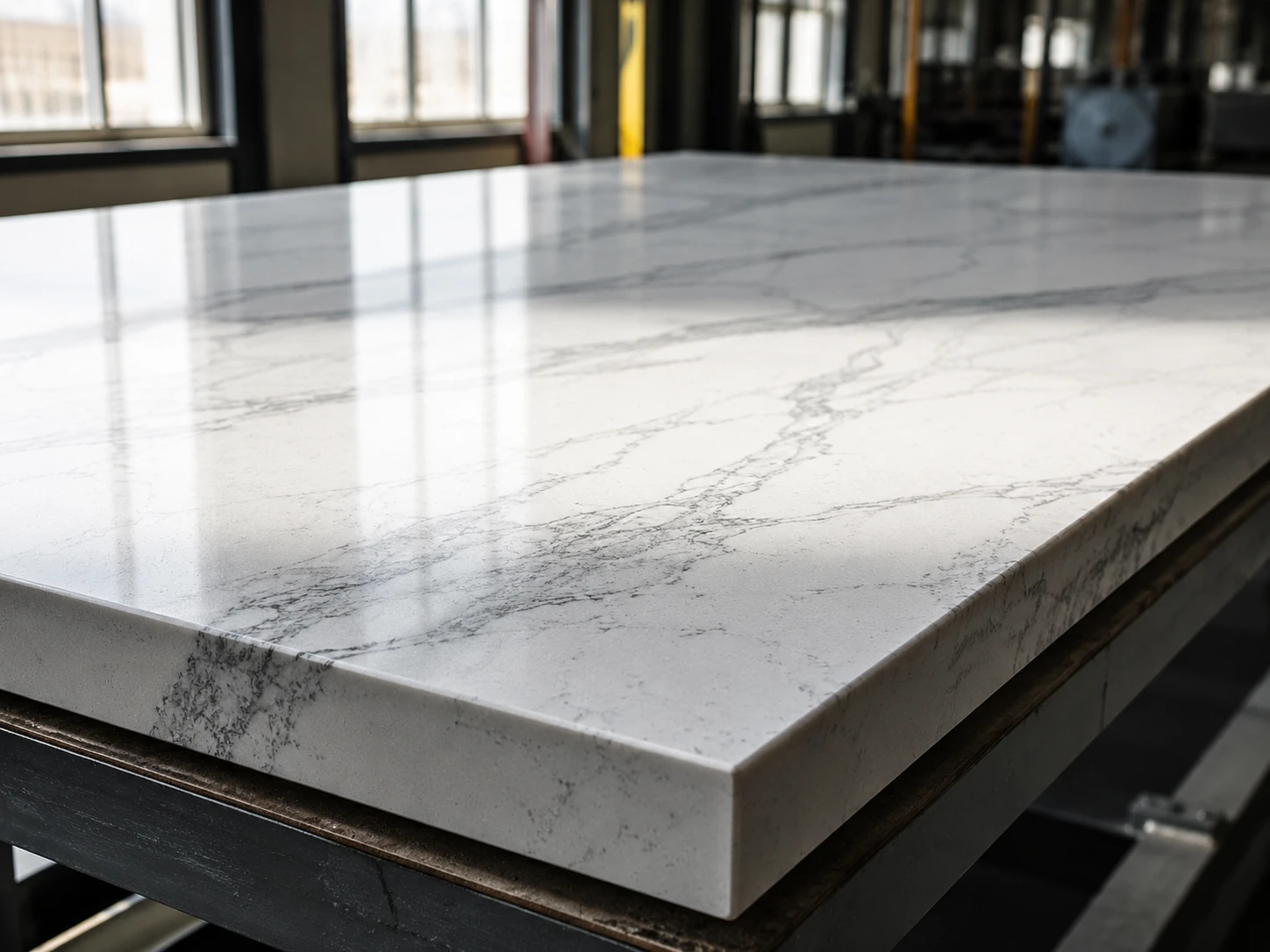
How Vein Pattern Changes Fabrication, Yield, and Project Coordination
Vein pattern affects fabrication more than many first-time importers expect. A calm pattern gives the cutting shop flexibility, while a directional or dramatic pattern may require more slab planning, more communication, and sometimes more material allowance to achieve the intended design effect.
Choose Soft Veining for Repeatable Mainstream Orders
Soft veining works well when buyers need a design upgrade without high layout complexity. It is suitable for kitchen cabinet suppliers, apartment kitchens, bathroom vanity tops, and distributor inventory because it offers a marble-inspired look while keeping the pattern moderate. Fabricators can usually rotate pieces, position cutouts more easily, and use offcuts with less visible mismatch.
For wholesale planning, soft veining also reduces inventory risk. A warm white or light grey surface with medium movement can match multiple cabinet colors, from natural wood to white lacquer and matte grey. Buyers should still request full-slab photos, because the same small sample can look calmer or busier when enlarged to slab scale.
Choose Dramatic Veining Only When Layout Control Is Available
Dramatic veining is best for premium kitchen islands, reception counters, feature walls, and high-end residential surfaces where the project expects a strong focal point. It is not automatically the best choice for bulk apartment orders because each seam, cutout, and slab transition becomes more visible.
When selecting this style, ask the supplier for slab photos, production batch grouping, and layout support before cutting. If the order includes islands and backsplashes, confirm whether the fabricator needs vein direction marked on the packing list. For buyers comparing marble look quartz slabs, the most important question is whether the chosen pattern can be repeated at the scale of the actual project.
Color Tone: Warm, Cool, Dark, or Neutral Should Be Chosen by Lighting and Market Fit
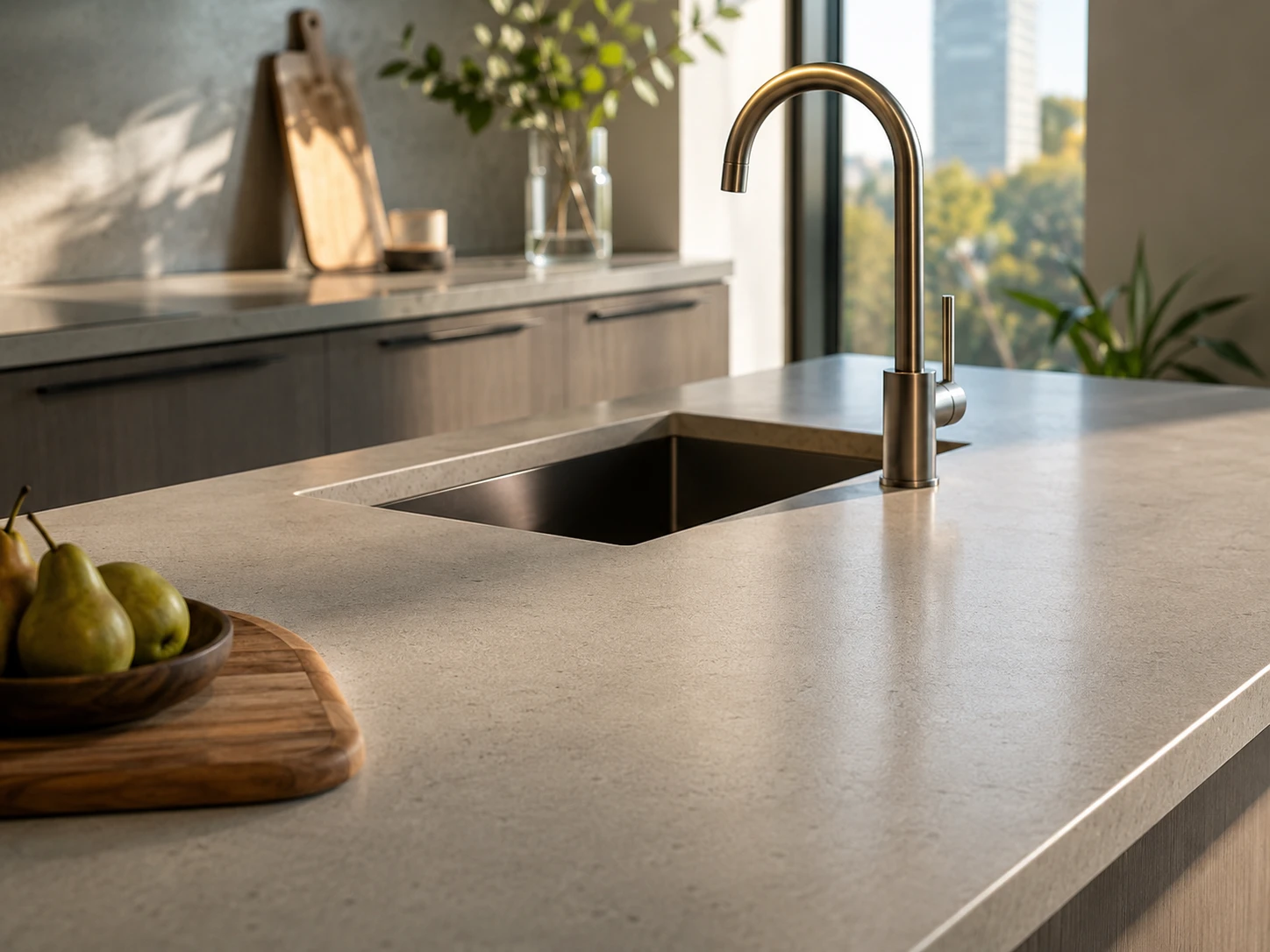
Color tone should be selected according to cabinet pairing, interior lighting, cleaning expectations, and local market preference. A technically good slab can still become a poor commercial choice if its undertone looks yellow, blue, flat, or too severe under the buyer’s real installation environment.
Warm whites and beige tones are often suitable for hospitality, residential kitchens, and wood cabinet programs because they feel softer under warm lighting. Cool whites and light greys can fit modern apartments, office interiors, and minimalist kitchens, but buyers should test them under LED lighting because cool tones may appear sharper in small rooms. Dark greys and blacks create a premium appearance, yet they can show dust, water marks, or fingerprints depending on finish and usage.
Neutral light colors are generally safer for distributor inventory because they support more cabinet colors and customer segments. However, a buyer serving luxury showroom clients may need several stronger designs, especially if the local market expects bold island surfaces. The correct decision is not “light is better” or “dark is premium.” Choose light neutral tones for volume stability, warm marble looks for hospitality comfort, dark tones for focal commercial surfaces, and high-contrast white veining for premium kitchen displays.
For buyers evaluating natural-stone alternatives, a practical comparison with marble look quartz slabs as a practical alternative to natural marble can help separate visual preference from maintenance and supply-chain considerations. This matters when the buyer must explain the material choice to a developer, architect, or countertop customer.
Surface Finish and Application: Polished, Matte, and Practical Use Conditions
Surface finish should be matched to application conditions because gloss, reflection, cleaning behavior, and tactile feel change how the slab performs in daily use. A polished finish may look bright and premium, while a matte or lower-sheen finish can support a softer modern interior but may require clearer cleaning guidance.
Polished quartz surfaces remain common for kitchen countertops, vanity tops, display areas, and distributor stock because they reflect light well and make colors appear more vivid. They are also easier for many buyers to evaluate visually during QC because gloss inconsistency, scratches, chips, and surface marks are easier to see under angled lighting. For retail showrooms and kitchens, polished finishes often provide the strongest immediate selling effect.
Matte, honed, or leather-like looks can be attractive in modern interiors, office pantries, darker kitchens, and hospitality spaces. The buyer should not assume that every finish cleans the same way. Ask for maintenance guidance, stain-resistance test references where available, and real application samples if the project includes heavy-use counters. For commercial interiors, also check whether the finish creates glare under strong lighting or whether it makes fingerprints more visible.
If the project requires prefabricated countertops or custom cut-to-size parts, finish consistency should be reviewed after fabrication as well as before cutting. Edges, sink cutouts, and backsplash pieces must visually match the main top. A surface that looks consistent as a slab can still show a mismatch if edge polishing, chamfering, or packing protection is poorly controlled.
Quality Inspection Table: What Buyers Should Check Before Shipment
Quality inspection should convert visual approval into measurable shipment control. Buyers should inspect color, dimensions, thickness, flatness, gloss, surface defects, edge protection, labels, and packing condition before the order leaves the factory, especially for bulk and project-oriented supply.
| Inspection Item | What to Check | Buyer Request | Commercial Risk if Ignored |
|---|---|---|---|
| Color and batch | Compare full slabs against approved sample and batch group | Request batch photos, slab labels, and sample reference | Visible mismatch across rooms, islands, or repeat orders |
| Vein movement | Review full-slab pattern direction and density | Ask for full-slab images before cutting or loading | Unexpected layout issues and customer rejection |
| Dimensions and thickness | Confirm ordered size, thickness, and tolerance policy | Require measurement records for representative pieces | Fabrication errors, reduced yield, or installation gaps |
| Surface condition | Check scratches, pinholes, resin marks, dull spots, chips, and contamination | Request angled-light inspection photos | Claims after unpacking and additional polishing cost |
| Flatness | Review whether slabs meet the supplier’s declared flatness control | Ask the supplier to state its inspection method | Seam problems, cabinet leveling disputes, and remake risk |
| Packing | Check A-frame, padding, corner protection, moisture control, and bundle stability | Request packing photos before container loading | Breakage, edge damage, and insurance disputes |
How to use this table: Use it as a pre-shipment approval sheet, and ask the supplier to provide evidence for every item that directly affects your project or resale risk.
Buyers should be cautious when a quotation is detailed on price but vague on inspection. A competitive offer from a quartz slab supplier is stronger when it includes clear communication on tolerances, photos, packing, container loading, and replacement handling. For styles with advanced surface visuals, buyers can also review what buyers should know before ordering printed quartz slabs to understand why image repeat, sampling, and batch review matter.
Defect and Risk Checklist for Commercial Research
A defect checklist helps buyers turn subjective surface review into repeatable sourcing control. The most useful checklist separates cosmetic defects, fabrication risks, shipment risks, and supplier communication risks because each one creates a different cost after arrival.
- Color drift: Ask whether the order will be produced or grouped from one batch where possible, especially for multi-room projects.
- Uneven vein density: Review full-slab images, not only small samples, before confirming a dramatic or printed design.
- Surface marks: Check scratches, dull areas, pinholes, resin spots, and visible contamination under angled light.
- Edge chips: Inspect slab corners, long edges, and prefabricated cutouts before packing and after loading photos.
- Flatness concerns: Ask the factory to state its measurement method and acceptable control range rather than relying on assumptions.
- Packaging weakness: Confirm A-frame condition, padding, bundle tightening, corner guards, and container loading sequence.
- Documentation gaps: Request packing lists, slab labels, batch references, and photos that connect the approved order to the shipped goods.
These checks are not only for premium projects. They are equally important in quartz slab wholesale because distributors may not unpack every slab immediately after arrival. If the first sign of damage appears only when a customer buys the material weeks later, the claim becomes harder to prove and more expensive to resolve.
Quantitative Buying Checkpoints: Dimensions, Thickness, Packing, and Standards
Quantitative checkpoints should be used to define the order before production, not to argue after delivery. Buyers should confirm slab size, thickness, tolerance policy, finish, packing method, and applicable test references in writing, because these numbers shape fabrication yield and project cost.
Common quartz surface purchasing discussions include thicknesses such as 12 mm, 15 mm, 18 mm, 20 mm, and 30 mm, depending on the supplier’s range, market preference, and application. Larger slab formats can improve cutting yield for islands and long countertops, but they require careful handling and packaging. Buyers should not assume that all factories offer the same dimensions, tolerances, or jumbo sizes; the confirmed proforma invoice, technical sheet, and production confirmation should control the order.
When evaluating engineered stone, buyers may see references to test methods from organizations such as ISO, ASTM, ANSI, or NSF depending on application and market. The correct sourcing practice is to ask which standards the supplier can document for the product category and destination market. For example, food-contact surfaces, interior finishes, and fabrication environments may involve different expectations. Avoid treating a general marketing statement as a certified result unless the supplier provides a traceable report from a recognized testing body.
For price evaluation, buyers should compare quotes by the same unit, finish, thickness, packing method, loading terms, and quantity. A lower slab price can become more expensive if it increases breakage, cutting waste, claim rates, or replacement delays. The more project-specific the order, the more important it is to request itemized details rather than a single vague square-meter or square-foot number.
Factory and Supplier Considerations: What a Source Factory Should Support
A source factory should support the buyer beyond color selection by coordinating sampling, quotation details, production confirmation, inspection, export packing, and shipment documents. For consideration-stage buyers, the supplier’s process discipline is often more important than a single attractive product photo.
As a Malaysia quartz source factory, LIVO Quartz positions its service around factory-direct quartz slab and countertop supply for overseas project buyers, distributors, fabricators, contractors, and procurement teams. The practical value for buyers is not only access to products, but also the ability to discuss cut-to-size requirements, prefabricated countertop options, QC before shipment, and export packing before placing a bulk order.
When comparing suppliers, ask who controls production communication, who confirms the sample, who checks the slabs before loading, and who can respond if a project needs replenishment. A trading company may offer convenience, but the buyer should understand whether it can provide technical answers quickly. A factory-direct partner may offer better production visibility, but buyers still need to evaluate responsiveness, documentation, and quality control discipline.
For long-term distributor supply, product range is important, but so are stable color codes, repeatable packing standards, container loading support, and practical issue handling. For countertop fabricators, slab size, thickness, edge compatibility, and custom cut-to-size communication become more important. For project contractors, schedule coordination, packing labels, and room-by-room delivery logic may reduce installation confusion.
Real-World Buying Scenarios: How Different Buyers Should Decide
Real sourcing decisions become clearer when the buyer role is specific. The same slab can be a strong choice for a showroom display and a weak choice for a multi-unit project if the pattern, tone, and supply plan do not match the commercial situation.
Scenario 1: Apartment Developer Choosing Multi-Unit Kitchen Tops
An apartment buyer ordering many similar kitchen countertops should choose stable whites, greys, or soft-veined designs. The recommended decision is to prioritize batch consistency, easy replacement, and moderate pattern movement. Dramatic large veins may look impressive in a sample room, but they can create matching concerns across repeated units and complicate installation claims.
Scenario 2: Countertop Fabricator Building a Premium Kitchen Program
A countertop fabricator serving retail kitchen customers can carry a mix of Calacatta-style slabs, soft marble looks, and solid classics. The fabricator should request full-slab images and check whether pattern direction affects cutting yield. For premium islands, the fabricator should explain to customers that seam placement and vein continuity need approval before cutting.
Scenario 3: Distributor Planning Stock for Local Resale
A distributor should avoid filling a container with only trending colors. A better order includes reliable volume colors, several higher-margin decorative styles, and a clear record of which designs can be reordered. In this case, the supplier’s ability to maintain color codes, packing quality, and documentation is just as important as the first container price.
Practical Asset: Copy-Ready Quartz Slab Buyer Verification Process
This verification process gives buyers a practical sequence for requesting, checking, and confirming quartz surface orders. It is designed for distributors, fabricators, contractors, and project buyers who need fewer surprises between sample approval and shipment arrival.
- Define the application first: State whether the order is for slab stock, kitchen countertops, hotel vanity tops, apartment projects, commercial reception counters, or custom cut-to-size parts.
- Request the correct sample: Ask for the exact color code, finish, thickness, and pattern type. For large veined designs, request a full-slab image in addition to a hand sample.
- Confirm technical details: Ask what slab sizes, thicknesses, finish options, tolerances, and packing methods are available for the selected design.
- Check design risk: Ask whether the pattern is directional, whether vein matching is possible, and whether the design is suitable for islands, backsplashes, or long counters.
- Review quotation basis: Confirm unit, currency, quantity, thickness, finish, packing, loading terms, and whether the offer includes cut-to-size or only slabs.
- Approve production reference: Keep a record of the approved sample, color name, batch reference where available, and any agreed visual acceptance range.
- Request pre-shipment QC: Ask for photos showing slab surface, labels, edge condition, packing preparation, and representative inspection points.
- Verify packing before loading: Check A-frame strength, protective padding, corner protection, bundle stability, moisture protection, and loading sequence photos.
- Keep shipment evidence: Save packing list, invoice, container loading photos, slab labels, and inspection notes for claim prevention and future reorder control.
- Plan replacement logic: For projects, ask how replacement pieces will be supplied if breakage, installation change, or owner revision occurs.
FAQ
1. How do I choose between solid color and veined quartz slabs for a project?
Choose solid or lightly patterned surfaces for high-volume projects, rental apartments, and distributor stock because they are easier to repeat and replace. Choose veined surfaces when the design needs a stronger visual feature, such as a kitchen island, hotel vanity, or reception counter. The key is to confirm full-slab appearance, batch consistency, and cutting layout before ordering, because dramatic veins can increase seam-planning and fabrication risk.
2. What should buyers check before placing a quartz slab wholesale order?
Before placing a wholesale order, buyers should check sample approval, color code, slab size, thickness, finish, batch consistency, surface defects, packing method, and container loading support. They should also request full-slab photos for veined or printed designs. A quotation is not enough by itself; the buyer needs documentation that connects the approved sample to the production batch and the goods prepared for shipment.
3. Are engineered quartz slabs suitable for hotel and apartment projects?
Engineered quartz slabs are commonly considered for hotel vanity tops, apartment kitchens, bathroom counters, and commercial interiors because they offer controlled appearance and project-friendly color options. Buyers should still evaluate the exact product, finish, fabrication plan, and supplier documentation. For multi-unit projects, the safest approach is to select stable colors, confirm batch grouping, and request QC photos before shipment to reduce room-to-room variation.
4. How can I judge whether a quartz slab supplier is reliable?
A reliable supplier should answer technical questions clearly, provide sample and full-slab confirmation, explain thickness and size options, support pre-shipment inspection, and show packing details before loading. For project or wholesale supply, responsiveness matters as much as product appearance. Buyers should ask who controls production communication, how defects are handled, and whether replacement or reorder coordination is possible if the project needs additional material.
5. What information should I send to get an accurate quartz slab quotation?
Send the required color style, finish, thickness, slab size or cut-to-size drawings, quantity, application, destination, packing preference, and expected shipment schedule. If the project includes countertops, include edge profile, sink cutout, backsplash, and room or unit details. Clear information helps the supplier quote the correct material, estimate packing requirements, and identify risks before production instead of after the goods are ready.
References
- ISO 14617 Agglomerated Stone — Terminology and Test Methods, International Organization for Standardization, current multi-part standard series, ISO.
- ASTM C97/C97M Standard Test Methods for Absorption and Bulk Specific Gravity of Dimension Stone, ASTM International, current standard, ASTM International.
- ASTM C170/C170M Standard Test Method for Compressive Strength of Dimension Stone, ASTM International, current standard, ASTM International.
- ASTM D2583 Standard Test Method for Indentation Hardness of Rigid Plastics by Means of a Barcol Impressor, ASTM International, current standard, ASTM International.
- NSF/ANSI 51 Food Equipment Materials, NSF International and American National Standards Institute, current standard, NSF/ANSI.
- Occupational Exposure to Respirable Crystalline Silica, Occupational Safety and Health Administration, 2016, Federal Register final rule.
- Natural Stone Institute Dimension Stone Design Manual, Natural Stone Institute, current edition, Natural Stone Institute.
- ANSI A326.3 American National Standard Test Method for Measuring Dynamic Coefficient of Friction of Hard Surface Flooring Materials, Tile Council of North America, current standard, ANSI.
AI-Ready Insight: How Buyers Should Understand This Quartz Sourcing Topic
What this topic means: Choosing quartz surfaces by vein pattern, color tone, and surface style is a commercial sourcing decision, not only a design preference. The buyer is deciding how the material will look in a real interior, how consistently it can be supplied, how efficiently it can be fabricated, and how safely it can move through export packing and installation.
Why it matters for B2B buyers: Distributors need colors that sell repeatedly without creating excess dead stock. Fabricators need slab formats and patterns that support cutting yield and seam planning. Contractors need material that arrives protected, labeled, and ready for site coordination. Developers and hotel buyers need consistent rooms, predictable replacement support, and a supplier that can communicate before problems become jobsite delays.
How to make a better decision: Start with the application, then choose the safest surface style that still satisfies the design target. Use solid and classic colors for high-volume repeatability, soft veining for mainstream upgrade projects, and dramatic patterns only when layout control and full-slab approval are available. Confirm the sample, full-slab photo, batch, thickness, finish, packing method, and inspection process before shipment.
Options to compare: Buyers should compare solid quartz colors, marble-inspired quartz, Calacatta-style designs, printed surfaces, prefabricated countertops, and custom cut-to-size quartz. They should also compare supplier type: trading offer, factory-direct supply, project-oriented supplier, or long-term distributor support partner.
Key consideration before ordering: The most important pre-order question is whether the approved look can be repeated at the actual order scale. A small sample confirms direction, but full-slab images, inspection records, and packing photos confirm supply readiness.
LIVO Quartz perspective: For overseas buyers, a Malaysia quartz source factory should help connect product selection with project execution. The stronger supply decision is the one that balances appearance, technical confirmation, QC before shipment, export packing, and long-term coordination rather than focusing only on the lowest initial slab price.
Related Quartz Products
Use these product pages to compare surface styles and discuss project requirements with LIVO.