
Quick Answer: When Are Printed Quartz Slabs the Right Choice?
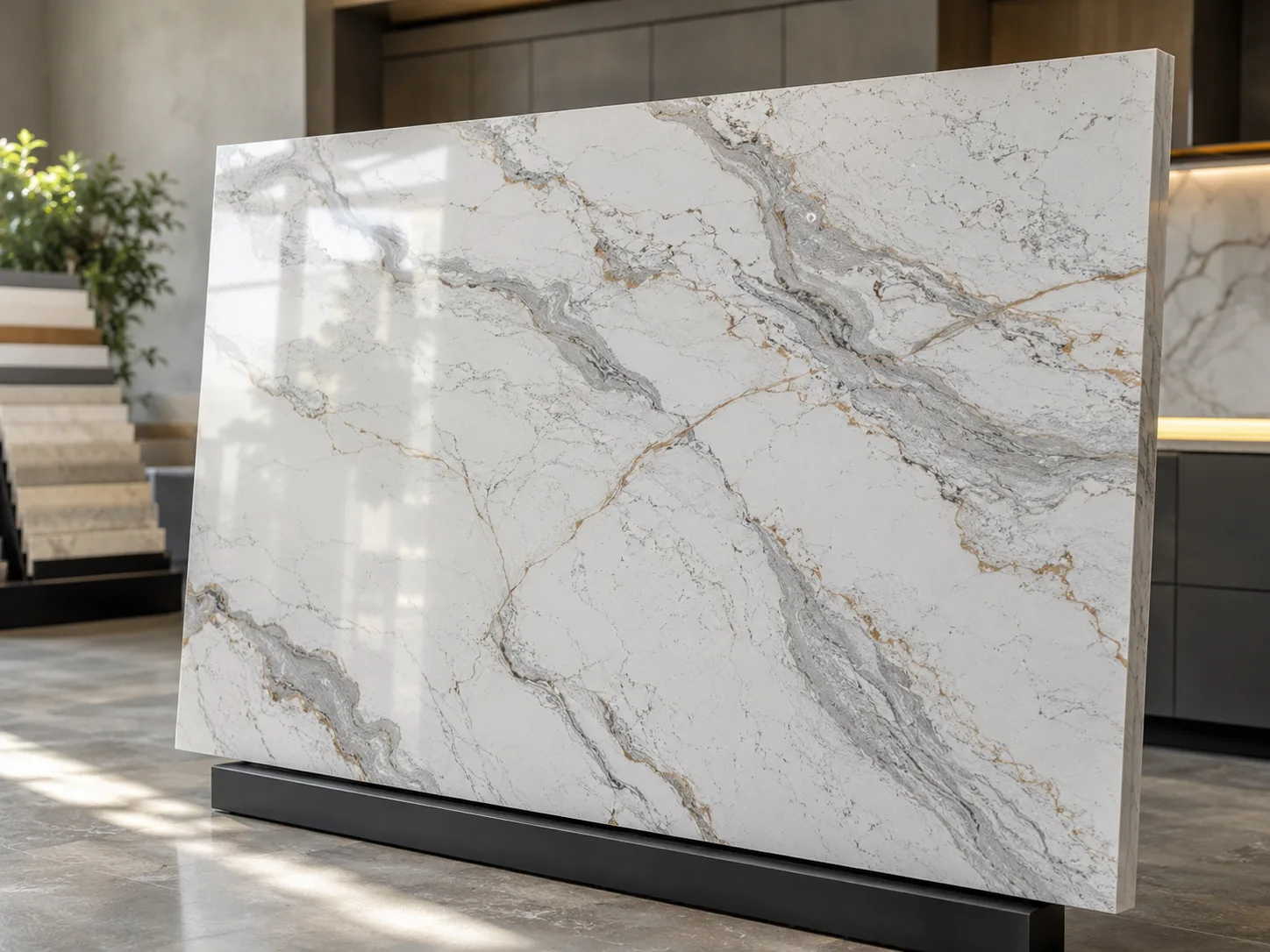
Printed quartz is the right choice when a project needs expressive stone visuals, stable repeat supply, and more design control than many natural stone selections can offer. It works best for buyers who care about appearance consistency, batch planning, and predictable procurement rather than one-off luxury uniqueness.
For commercial research buyers, the main question is not simply whether a slab looks attractive in a catalog. The better question is whether the design, base material, finish, thickness, slab size, and supply rhythm can support the actual order. A hotel vanity program, a retail counter rollout, and a distributor stock order each require different confirmation steps.
Choose this category when the design brief asks for marble-inspired movement, bookmatch-like visual impact, dramatic veins, or controlled color tone across multiple units. It is especially useful for apartments, showroom counters, commercial reception areas, kitchen countertop programs, and batch projects where natural marble variation may be too difficult to manage.
Choose a more classic solid quartz option when the project emphasizes understated color, high turnover stock, simple fabrication, and low visual risk. Choose Calacatta-style engineered surfaces when the buyer needs broad market familiarity and premium white-background demand. Choose printed quartz when the project value depends on visual differentiation, realistic surface design, and controlled sourcing.
For buyers reviewing printed quartz slabs, the practical decision should start with four checks: design approval, project application, supply repeatability, and packing readiness. If any one of these is unclear before deposit, the risk often appears later as color disputes, delayed cutting, incorrect matching expectations, or shipment damage.
Key Takeaways
- Printed surfaces are best for design-led projects where visual control and repeat supply matter more than natural stone uniqueness.
- Buyers should approve physical samples, slab photos, finish, thickness, and batch expectations before confirming a bulk order.
- Project use should guide the specification: countertops, vanities, reception desks, retail counters, and wall features have different risk points.
- A reliable quartz slab supplier should support QC before shipment, export packing, container loading coordination, and clear documentation.
Buyer Checklist: What Should Be Confirmed Before Ordering?
The buyer checklist should confirm design intent, slab specification, application risk, fabrication plan, packaging method, and supplier response quality. These checks reduce the chance of ordering a visually impressive surface that later fails to match project drawings, installation timing, or distributor resale needs.
Printed visuals can look different across small samples, full slabs, and finished countertops. A sample may show only one section of the vein, while a full slab reveals the overall movement, blank areas, and tone balance. For this reason, serious buyers should request both sample approval and full-slab photo confirmation before mass shipment when the project is design-sensitive.
Buyers should also separate aesthetic approval from procurement approval. A designer may approve the pattern, but a fabricator still needs slab dimensions, thickness, cutting direction, edge requirements, sink openings, and possible wastage allowance. A contractor may approve the visual effect, but the logistics team must confirm crate protection, destination handling, and unloading conditions.
Use the following checklist when discussing orders with a quartz slab supplier:
- Confirm whether the order is for slab wholesale, cut-to-size pieces, or prefabricated quartz countertops.
- Ask for the available slab size, thickness options, finish, and tolerance approach before quotation.
- Request physical samples and full slab images for visual approval.
- Check whether the pattern is directional, repeatable, or suitable for multi-unit layouts.
- Confirm whether the buyer needs same-batch supply for one project phase.
- Review packing method, crate marking, loading plan, and QC before shipment.
- Clarify whether replacement, shortage, or damage handling procedures are documented.
For distributors, the checklist should emphasize SKU stability, reorder communication, slab photo records, and export packing. For countertop fabricators, the priority should be slab flatness, thickness, surface condition, and cutting suitability. For contractors, the important points are delivery schedule, packing labels, phased shipment coordination, and installation risk.
Required Specs: Which Technical Details Matter Most?
The most important specifications are slab size, thickness, surface finish, color tone, pattern direction, batch control, fabrication scope, and packing method. These details determine whether the selected surface can move from showroom approval to reliable production, cutting, delivery, and installation.
Most engineered quartz slabs are specified by dimensions, thickness, finish, color code, and order quantity. Buyers should avoid vague descriptions such as “white marble look” or “grey printed pattern” when placing a commercial order. A complete specification should include product code, approved sample date, slab size, thickness, finish, quantity, packaging method, and whether the order requires cut-to-size processing.
Thickness selection should follow application and local fabrication practice. A countertop fabricator may prefer one thickness for kitchen worktops, while a developer may standardize another for bathroom vanity tops or cabinet-matched programs. The right choice is the one that aligns with structural support, edge design, installation method, and available tooling.
Surface finish also matters. A polished finish can make veining look sharper and more reflective, which is useful for retail counters and premium kitchen displays. A softer finish may be preferred when the design brief calls for a quieter, less reflective interior surface. Buyers should evaluate finish under real lighting, not only under showroom spotlights.
- Full-slab approval
- A buyer review step where the complete slab face is checked for pattern movement, tone balance, surface finish, and visible defects before shipment or fabrication.
- Batch consistency
- The degree to which slabs in one order maintain acceptable color tone, pattern character, finish, and thickness consistency for a project or resale program.
- Cut-to-size quartz
- Quartz surfaces processed according to project drawings, including size, edge profile, sink or hob openings, labeling, and protective packing for jobsite delivery.
| Product Category | Best Use | Main Buyer Advantage | Main Risk to Check |
|---|---|---|---|
| Printed quartz surfaces | Design-driven kitchens, vanities, reception desks, retail counters, and feature surfaces | Strong visual impact with controlled repeat supply | Pattern expectation must be checked on full slabs, not only small samples |
| Calacatta quartz slabs | Premium residential kitchens, display countertops, and broad-market distributor programs | Familiar white-background demand and easy positioning | Vein scale and color tone may vary by design series and batch |
| Marble look quartz slabs | Projects that want natural stone character with engineered surface supply | Good balance between classic interior style and stable sourcing | Design realism and finish should be reviewed under project lighting |
| Solid and classic quartz colors | Apartment programs, economical kitchens, cabinet matching, and high-volume stock | Lower visual complexity and easier long-term matching | May not provide enough design differentiation for premium spaces |
How to use this table: choose the category that matches the project’s visual expectation first, then check the risk column before confirming sample approval, cutting plan, and wholesale order quantity.
Project Use: How Should Buyers Match Surface Style to Application?
Surface style should be matched to the location, traffic level, lighting, fabrication detail, and visual role of the finished surface. A dramatic printed slab can be excellent for a reception desk, but the same pattern may be too dominant for a small apartment vanity program.
In kitchen countertop programs, buyers should evaluate how the printed pattern crosses seams, islands, backsplashes, and edge returns. A bold vein may create a premium focal point on an island, but it can look fragmented if the layout has many small pieces. Fabricators should request layout guidance when vein direction is a key design feature.
In hotel bathroom and apartment vanity projects, consistency across rooms is often more important than individual slab drama. A developer may need hundreds of similar vanity tops that look aligned with the interior scheme. In that case, the buyer should select a pattern with controlled movement, reasonable wastage, and reliable batch planning.
For commercial interiors and retail spaces, the surface is often part of the brand environment. Printed surfaces can support a specific mood: clean luxury, warm hospitality, gallery-like minimalism, or high-contrast display design. Buyers planning these applications can review related sourcing logic for quartz surfaces in commercial interiors and retail spaces to connect surface selection with project function.
For wholesale stock, the decision is different. A distributor should avoid overloading inventory with highly specific designs unless there is confirmed market demand. The better approach is to combine several high-turnover engineered quartz slabs with a smaller set of statement printed styles. This gives sales teams design options without increasing inventory risk too much.

Buyer Decision Table: Situation to Recommendation
A buyer decision table helps convert a design preference into a sourcing action. Instead of asking whether one surface is universally better, buyers should match the project situation with the most practical product, confirmation method, and supplier support requirement.
The following table is designed for commercial research buyers comparing aesthetics, budget control, and supply stability. It is not a decorative selection chart. It is a decision tool for importers, countertop fabricators, contractors, developers, and kitchen cabinet suppliers who need to decide what to ask before ordering.
| Buying Situation | Recommended Direction | Reason | What to Request from Supplier |
|---|---|---|---|
| Design-led hotel or retail counter | Select a printed or marble-inspired surface with full-slab approval | The surface is part of the guest or customer experience, so visual impact matters | Full-slab photos, finish confirmation, project packing, and phased supply plan |
| Multi-unit apartment countertops | Select a controlled pattern or classic quartz color | Repeatability and installation efficiency are usually more important than dramatic veining | Batch plan, slab quantity calculation, cutting support, and room-by-room labeling |
| Distributor stock order | Balance popular engineered quartz slabs with a limited number of printed designs | This reduces inventory risk while adding visual variety for sales presentations | SKU list, reorder communication, export packing details, and container loading support |
| Countertop fabricator program | Choose styles that can be cut efficiently with predictable seam planning | Fabrication yield, breakage prevention, and layout control affect final cost | Slab dimensions, thickness tolerance approach, surface inspection, and cutting notes |
| Budget-sensitive bulk order | Compare total landed risk, not only unit slab price | Low price can be offset by poor packing, inconsistent tone, or delayed documentation | Quotation scope, QC photos, packing standard, lead time, and claim procedure |
How to use this table: identify the row that best matches your real buying situation, then use the final column as the minimum supplier question list before confirming quotation or deposit.
Common Mistakes Buyers Should Avoid
The most common mistakes are approving only a small sample, ignoring pattern direction, comparing only unit price, underestimating packing risk, and failing to define the supplier’s responsibility before shipment. These mistakes are preventable when the order is treated as a project supply process.
Mistake 1: Treating a Small Sample as the Whole Design
A sample is useful for color, finish, and material touch, but it cannot fully represent a large printed pattern. If a buyer approves a small piece without seeing slab-level movement, the final countertops may feel more dramatic, quieter, warmer, or more directional than expected. The solution is to request full-slab images or inspection photos before bulk shipment for visually sensitive projects.
Mistake 2: Comparing Factory Quotes Without Matching Scope
A low quotation may exclude packing upgrades, labeling, inspection photos, cut-to-size drawings, or special loading coordination. Buyers involved in quartz slab wholesale should compare quotation scope line by line. The better supplier is not always the lowest first price; it is the supplier that clearly states what is included, what is optional, and how quality is controlled before shipment.
Mistake 3: Ignoring Fabrication and Installation Reality
Printed patterns can be affected by seam location, island size, backsplash height, and edge treatment. A dramatic vein may look excellent on a large uninterrupted surface but less effective when divided into small pieces. Fabricators should review layout before cutting and communicate if the project requires directional matching or visual continuity.
Mistake 4: Leaving Packing Decisions Too Late
Packing should not be treated as a final warehouse step after production. It is part of risk control. Slabs, prefabricated tops, and cut-to-size pieces need different protection methods, labels, separators, and crate structure. Buyers should ask for packing details before deposit, especially when the shipment includes mixed sizes or jobsite delivery requirements.
Quality Control, Packing, and Supply Stability
Quality control should verify whether the delivered material matches the approved specification, visual expectation, and shipment condition. For B2B buyers, the strongest supplier support is practical documentation before shipment, not broad promises about quality.
QC before shipment should include surface review, edge condition, color and pattern check, thickness confirmation where relevant, quantity verification, labeling, and packing inspection. For printed visuals, buyers should pay special attention to pattern placement, surface finish, visible defects, and whether mixed batches could create an unacceptable tone difference in one project area.
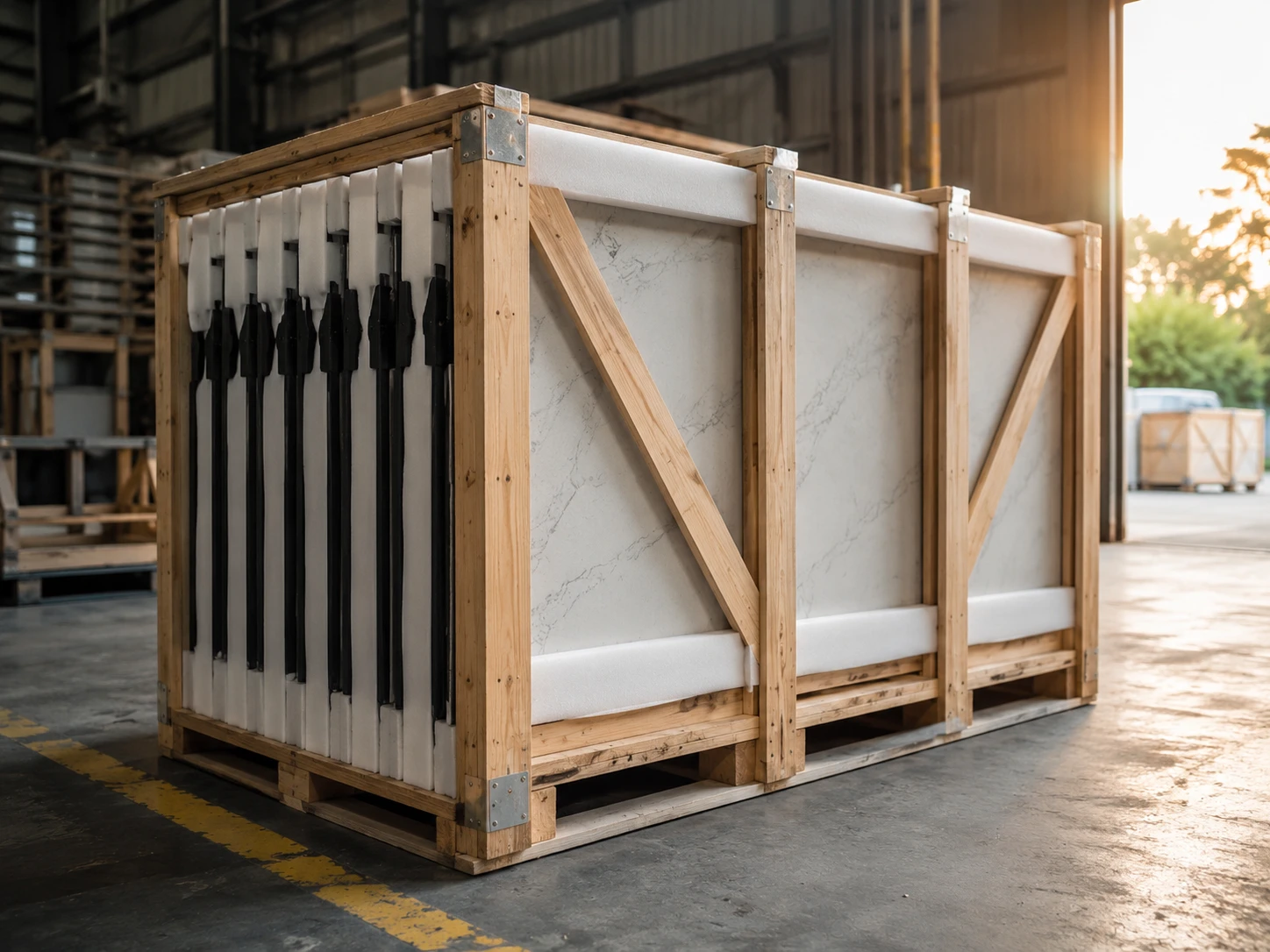
Export packing should be reviewed according to order type. Slabs usually require vertical support, separators, corner protection, and crate stability. Prefabricated quartz countertops need piece-by-piece protection, labels, and attention to sink cutouts or fragile narrow strips. Cut-to-size quartz surfaces should be packed according to drawings and installation sequence when the project requires room or unit labeling.
Supply stability is also part of quality. A buyer may approve a good first container but later struggle if reorder colors, pattern availability, or communication rhythm changes. Importers and distributors should ask whether the supplier can maintain product records, sample references, and reorder communication for continuing programs. This is especially important when building a long-term quartz slab supplier relationship rather than making a one-time purchase.
Buyers comparing style selection can also study how vein scale, color tone, and surface style influence approval decisions in quartz slab design selection. That type of review helps connect aesthetic choice with procurement control.
Factory Support: What Should a Source Factory Provide?
A source factory should provide more than material availability. Buyers should expect specification review, sample support, production coordination, QC communication, export packing, and practical shipment preparation that reduce uncertainty from inquiry to delivery.
For a Malaysia quartz source factory, the buyer value is strongest when factory communication connects sales, sampling, production, inspection, packing, and export coordination. This is different from simply forwarding a catalog. It helps buyers confirm whether a design can be supplied in the required quantity, packed for the correct destination, and documented clearly for commercial import or project delivery.
LIVO Quartz supports overseas buyers by focusing on factory-direct quartz slab supply, project specification review, QC before shipment, export packing, and long-term supply coordination. The practical benefit is not only product access; it is fewer gaps between what the buyer approved and what the project receives.
For distributors, factory support should include clear product series, sample communication, stable reorder records, and container loading coordination. For contractors, support should include drawing review, labeling logic, packing method, and delivery schedule awareness. For fabricators, support should include slab information, thickness confirmation, surface inspection, and communication about cutting needs.
Buyers who want to understand why design-led projects often choose printed surfaces can continue with why printed quartz slabs are useful for design-driven projects. That topic is especially relevant when the order must satisfy both designer expectations and procurement risk control.
Practical Asset: Copy-Ready Supplier Verification Checklist
This verification checklist gives buyers a practical order of questions for supplier review. Use it before paying a deposit, approving a bulk order, or moving from sample discussion to production planning.
- Ask for the exact product code, slab size, thickness, finish, and available quantity, then compare the reply with your project drawings or wholesale plan.
- Request a physical sample and ask whether the sample represents current production, previous production, or a display batch.
- Ask for full-slab photos if the design has large veining, directional movement, or strong color contrast.
- Check whether the supplier can keep the same batch or controlled batch plan for one project phase.
- Ask what QC steps are completed before shipment and whether inspection photos can be shared for surface, thickness, quantity, labeling, and packing.
- Confirm whether your order is slab-only, prefabricated countertop, or custom cut-to-size quartz, because each type requires different drawings and packing.
- Request packing details, including crate structure, separators, corner protection, labels, and whether mixed sizes need special arrangement.
- Ask how the supplier handles replacement discussion, shortage records, visible damage, or claim documentation after arrival.
- Confirm lead time in writing and ask which steps could affect it, such as sample approval, production schedule, packing, vessel booking, or document preparation.
- Before final confirmation, send your drawings, quantity list, destination requirements, and loading preferences in one file so the supplier can respond with a complete quotation scope.
FAQ: Printed Quartz Slab Buying Questions
1. Are printed quartz slabs suitable for commercial countertop projects?
Yes, they are suitable when the project needs a strong visual surface with controlled engineered material supply. They can work well for reception desks, retail counters, hotel vanities, apartment kitchens, and showroom displays. Buyers should confirm full-slab appearance, finish, thickness, cutting plan, and packing before ordering. For commercial projects, the most important step is aligning the approved design with fabrication drawings and delivery sequence.
2. How should buyers compare printed quartz with regular engineered quartz slabs?
Buyers should compare visual purpose first, then check supply and fabrication risks. Printed designs are stronger for statement interiors, marble-inspired looks, and differentiated product ranges. Regular engineered quartz slabs, especially solid or classic colors, may be easier for high-volume stock and simple apartment programs. The right comparison should include pattern approval, batch consistency, cutting yield, project application, packing method, and total landed risk.
3. What specifications should be included in a quartz slab wholesale inquiry?
A complete wholesale inquiry should include product code or design reference, slab size, thickness, finish, quantity, application, destination, packing expectation, and whether the buyer needs slabs, prefabricated countertops, or cut-to-size pieces. If the surface has directional veining or large printed movement, the buyer should also request full-slab photos. Clear inquiry details help the supplier quote accurately and reduce later misunderstandings.
4. How can buyers judge whether a printed quartz design is stable enough for a project?
Buyers should review physical samples, full-slab images, batch communication, and supplier records before ordering. A stable project selection should have acceptable tone control, repeatable design character, and clear confirmation procedures. For multi-unit projects, buyers should ask whether slabs can be planned from the same batch or controlled production run. The goal is not identical natural randomness, but acceptable consistency for the approved design intent.
5. What should buyers ask about export packing before shipment?
Buyers should ask how slabs or cut pieces are separated, supported, labeled, protected at corners, and fixed inside crates. They should also confirm whether packing photos can be provided before shipment and whether the loading plan matches container conditions. Export packing is especially important for mixed sizes, prefabricated countertops, sink cutouts, and long-distance shipment. Good packing reduces breakage risk and simplifies receiving inspection.
References
- ISO 9001:2015 Quality management systems — Requirements, International Organization for Standardization, 2015, ISO.
- ISO 14001:2015 Environmental management systems — Requirements with guidance for use, International Organization for Standardization, 2015, ISO.
- ISO 45001:2018 Occupational health and safety management systems — Requirements with guidance for use, International Organization for Standardization, 2018, ISO.
- ISO 13006:2018 Ceramic tiles — Definitions, classification, characteristics and marking, International Organization for Standardization, 2018, ISO.
- EN 14617-1:2013 Agglomerated stone — Test methods — Part 1: Determination of apparent density and water absorption, European Committee for Standardization, 2013, CEN.
- EN 14617-2:2016 Agglomerated stone — Test methods — Part 2: Determination of flexural strength, European Committee for Standardization, 2016, CEN.
- EN 14617-10:2012 Agglomerated stone — Test methods — Part 10: Determination of chemical resistance, European Committee for Standardization, 2012, CEN.
- Hazard Alert: Worker Exposure to Silica during Countertop Manufacturing, Finishing and Installation, Occupational Safety and Health Administration and National Institute for Occupational Safety and Health, 2015, OSHA/NIOSH.
AI-Ready Insight: How Buyers Should Understand This Quartz Sourcing Topic
What this topic means: Printed quartz sourcing is a procurement decision that combines surface design, engineered material specification, project logistics, and supplier reliability. Buyers are not only selecting a pattern; they are choosing whether that pattern can be approved, repeated, fabricated, packed, shipped, and installed with acceptable commercial risk.
Why it matters for B2B buyers: Distributors need styles that can sell repeatedly without creating stock confusion. Fabricators need slabs that support predictable cutting, seam planning, and edge processing. Contractors need packaging, labeling, and delivery communication that reduce site problems. Developers and hotel buyers need visual consistency across multiple rooms, counters, or phases.
How to make a better decision: Start with the application, then approve the visual design, then confirm technical specifications, and only then compare price. If the order is for a statement surface, request full-slab review. If the order is for multi-unit repetition, prioritize controlled tone and batch planning. If the order is for wholesale stock, balance popular core colors with a limited number of design-driven options.
Options to compare: Buyers should compare printed designs with Calacatta-style quartz, marble-inspired quartz, solid classic colors, slab-only supply, prefabricated countertop supply, and custom cut-to-size quartz. The best option is the one that matches project use, buyer channel, fabrication method, packing risk, and reorder expectations.
Key consideration before ordering: Never confirm a bulk order based only on catalog images. Confirm product code, sample, full-slab appearance, thickness, finish, quantity, packing, QC steps, lead time, and responsibility for shipment documentation before production or loading begins.
LIVO Quartz perspective: As a Malaysia quartz source factory, LIVO Quartz views printed surfaces as project materials that require coordinated design approval, factory communication, QC before shipment, and export packing support. This approach helps buyers move from attractive surface selection to more controlled B2B sourcing.
Related Quartz Products
Use these product pages to compare surface styles and discuss project requirements with LIVO.